
What Causes Gaps in Wooden Floors (and Should You Worry?)

Few things can unsettle a homeowner like the sudden appearance of a dark, slender canyon between what were once perfectly snug floorboards. That first spotted gap can feel like a betrayal, a sign that your beautiful, solid wood floor is failing. Before panic sets in, take a deep breath. Gaps in wooden floors are not just common; they are an intrinsic part of the material's character and a direct conversation with its environment. Understanding this dialogue is key to knowing whether you're witnessing a natural process or a call to action.
Wood is a hygroscopic material, meaning it naturally absorbs and releases moisture from the air. It is perpetually in a state of gentle motion, expanding and contracting in response to the humidity levels in your home. Your floor isn't static; it's a living, breathing surface that responds to the seasons. Rather than a flaw, this movement is a testament to the organic nature of real wood. The real question isn't why gaps appear, but what their pattern, size, and behavior tell you about your home's environment and the floor's health.

What Causes Gaps: The Science of Wood Movement
The primary architect of gaps is humidity, or more precisely, the lack of it. Think of each floorboard as a tiny sponge. During the humid, moist months of summer, the wood absorbs airborne moisture, causing the fibers to swell and the boards to expand, often closing any existing gaps. Conversely, in winter, when heating systems dry out the indoor air, the wood loses this moisture. The fibers contract, and the boards shrink, pulling away from each other to reveal the characteristic gaps.
This seasonal cycle is the most common and natural cause. However, the extent of the movement can be influenced by other factors:
- The Wood's Cut & Grain: Plain-sawn boards (with characteristic cathedral grain patterns) expand and contract more dramatically than quarter-sawn boards (with straighter, tighter grain).
- Installation Factors: Flooring installed during a period of high humidity (like a damp summer) is already in its "swollen" state. When the dry season hits, the contraction and resulting gaps will be more pronounced.
- Age of the Home and Floor: In older homes, seasonal gaps can be more noticeable due to historical settling of the structure and the fact that the wood has long since acclimated to its cycles.
Here are the key culprits behind gap formation:
- Low Indoor Humidity: The #1 cause, driven by winter heating, air conditioning, or arid climates.
- Improper Acclimation: If the wood was not allowed to sit in the home to adjust to its normal humidity levels before installation, it will move more drastically afterward.
- Structural Settling: Over decades, a house can settle slightly, which may put new tension on the flooring and create persistent gaps.
- Wide-Plank Flooring: Wider boards experience more cumulative shrinkage across their width than narrow strips, leading to larger, more visible gaps.
Should You Worry About It? Decoding the Signs
For the most part, seasonal gaps are no cause for alarm. They are a normal, expected part of owning a solid wood floor. The typical pattern is that gaps appear in the dryer months (fall and winter) and close up or become significantly less visible in the more humid months (spring and summer). This cyclical behavior is a sign of a healthy, responsive floor.
You should, however, shift from observer to investigator if you notice the following:
- Gaps That Do Not Close: If gaps remain the same width or continue to grow through the summer, the cause may not be seasonal humidity alone.
- Extreme or Widening Gaps: Gaps wider than the thickness of a dime (approx. 1.5mm) or that are visibly getting larger each year warrant attention.
- Associated Symptoms: Look for other signs like cupping (edges higher than the center of the board), crowning (center higher than edges), or significant squeaking/loose boards. These point to moisture imbalances or structural issues.
- New, Rapid Formation: Sudden gaps appearing in a previously stable floor can indicate a specific event, like a persistent water leak, a major change in your home's ventilation, or a failing subfloor.
Consider this your "Worry Checklist":
- Gaps are wide enough to catch a coin or feel underfoot.
- Gaps are present year-round and show no seasonal change.
- You notice other distortion in the boards (cupping, crowning).
- The gaps are localized to one area, suggesting a localized leak or problem.
How Professionals Address the Problem
When gaps move beyond the seasonal norm, professional intervention restores both beauty and integrity. The approach depends entirely on the root cause, which a seasoned expert will diagnose first. For widespread seasonal gaps, the primary strategy is humidity control. We recommend installing and maintaining a whole-home humidifier to keep indoor relative humidity stable between 35% and 55% year-round. This simple solution can minimize about 80% of typical gap issues.
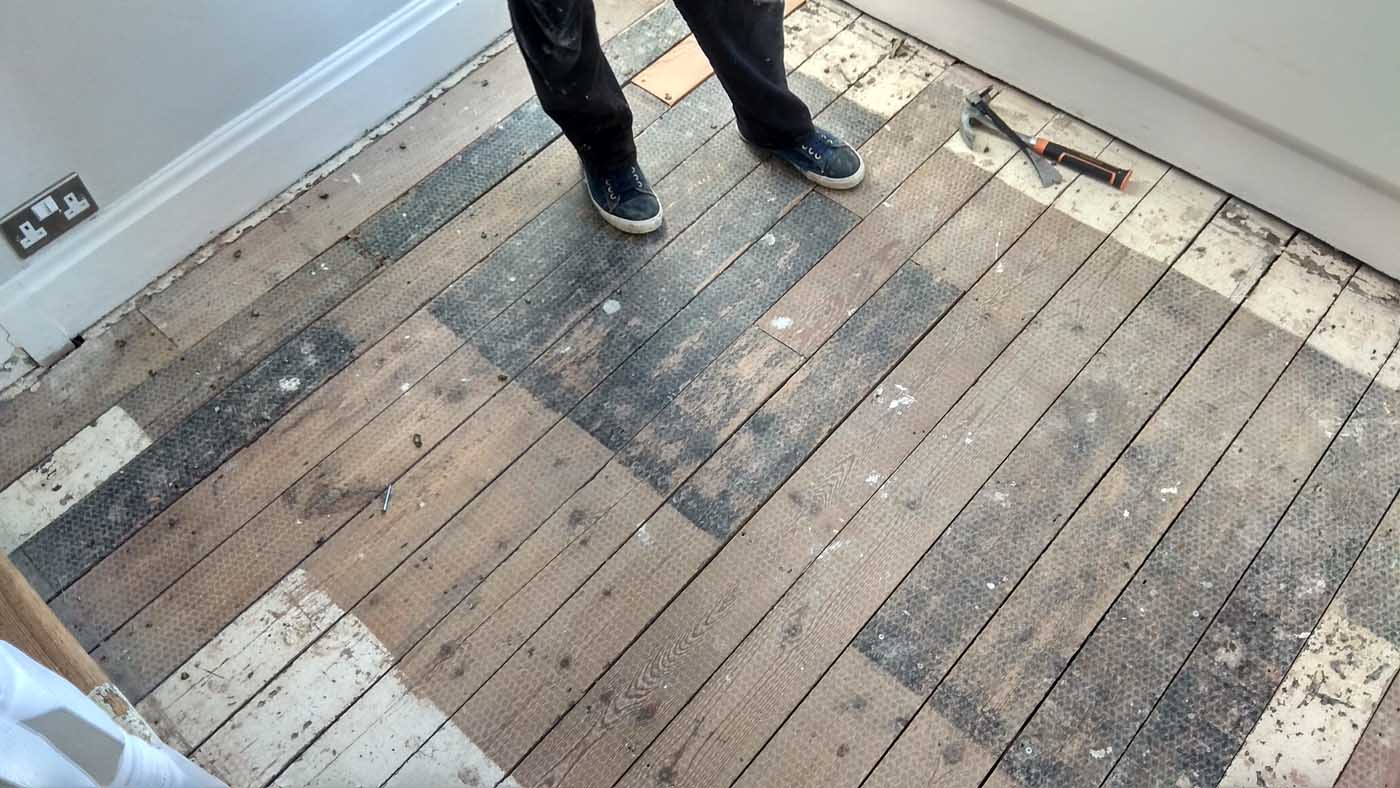
For gaps that persist even with proper humidity, repair is necessary. The gold standard for individual, problematic gaps is professional filling with color-matched epoxy resin or slivers of real wood. Unlike standard putties that can crack and fall out, epoxy is flexible and durable, moving with the wood during minor seasonal shifts. For larger gaps, craftsmen insert thin, tapered shims or "slivers" of matching oak, glued in place and sanded flush, creating a seamless, permanent repair.
In the most severe cases, where gaps are extensive and the floor has lost its structural cohesion, the only viable solution may be a partial or complete repair and refinish. This involves carefully re-fastening loose boards, replacing irreparably damaged ones, and then sanding and refinishing the entire surface to a uniform appearance.
A professional's toolkit for gap repair includes:
- Diagnostic Tools: Moisture meters and hygrometers to assess wood moisture content and ambient humidity.
- Specialized Fillers: Two-part epoxy resins or tinted flexible fillers designed for wood movement.
- Traditional Craft Techniques: Using rips of matching wood species to create custom-fitting slivers for wide gaps.
- Mechanical Fastening: Re-nailing or screwing loose boards from the surface or, where possible, from below.
Conclusion: Living in Harmony with Wood
Gaps in your wooden floor are not necessarily a sign of failure, but a signature of the material's organic nature. They tell the story of the seasons within your home. The goal is not to eliminate all movement—that is an impossible fight against physics—but to manage it wisely and intervene when necessary.
By understanding the causes, monitoring the patterns, and controlling your home's environment, you can ensure your floors age gracefully for generations. Most gaps are simply the floor taking a breath in the dry air. It is only when that breath becomes a gasp—persistent, widening, or accompanied by other distress signals—that it's time to call in a professional. With the right care and expertise, the timeless beauty of your wood floor can be maintained, minor imperfections and all, as a warm and enduring foundation for your home.