
Glue-Down vs. Nail-Down Installation: Which Is Better and Why?
The timeless beauty of a hardwood floor begins long before the first piece of furniture is placed. Its foundation—the installation method—is a critical decision that impacts not only the day-to-day feel underfoot but also the floor’s longevity, stability, and performance for decades to come. For solid hardwood flooring, the two primary installation techniques are nail-down (or staple-down) and glue-down. A third, floating installation, is typically reserved for engineered wood. Understanding the nuances, advantages, and ideal applications of glue-down and nail-down methods is essential for choosing the path that leads to a flawless, enduring floor.
This is not merely a question of contractor preference; it’s about matching the technique to your subfloor, your chosen wood, your environment, and your expectations for the finished product. Let’s delve into the core of each method to demystify this foundational choice.
Understanding the Nail-Down Method
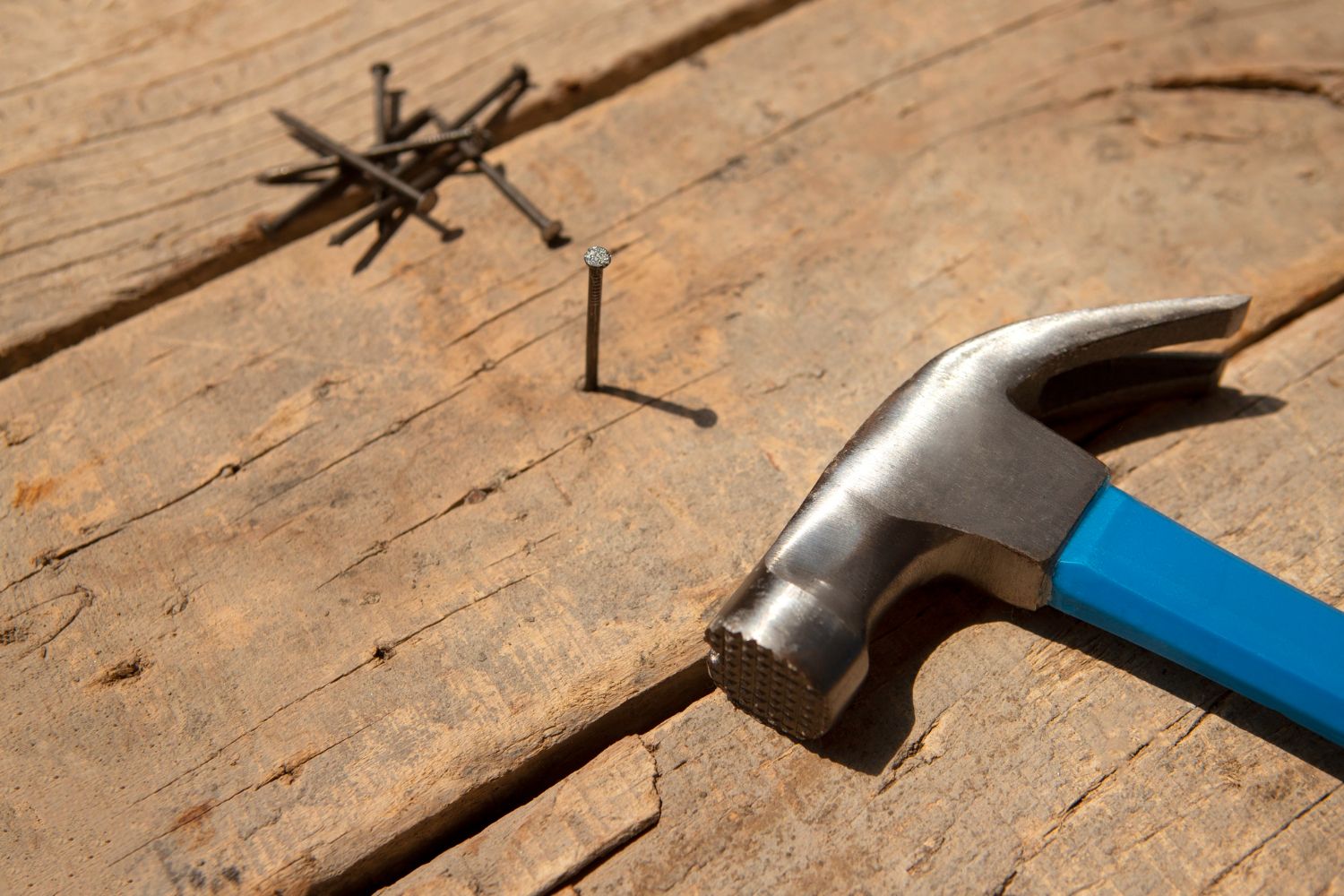
The nail-down technique is the traditional, time-honored approach for installing solid hardwood planks over a wooden subfloor. It involves face-nailing or, more commonly, blind-nailing through the tongue of the plank at an angle using a specialized pneumatic flooring nailer. The nail is driven through the tongue so that it becomes completely hidden by the groove of the next board.
The Core Principle: The planks are mechanically fastened to the wooden subfloor (typically plywood or oriented strand board) beneath them, creating a direct, physical connection.
Ideal Applications for Nail-Down Installation:
- Subfloor Type: Exclusively over wooden subfloors. It is not suitable for concrete.
- Flooring Type: Primarily for solid hardwood planks, usually ¾” thick. Some thicker engineered planks can also be nailed.
- Project Scope: Excellent for both new construction and major renovations where the subfloor is accessible and in good condition.
Advantages of the Nail-Down Method:
- Time-Tested Durability: This method has proven itself over centuries. A properly nailed floor is incredibly secure and can last the lifetime of the home, often able to be refinished multiple times.
- Allows for Natural Movement: Wood expands and contracts with seasonal humidity changes. The nail-down method holds the floor firmly but allows for minor, natural movement across the entire field without creating stress points.
- Potential for Fewer Moisture Issues: When installed with the correct moisture barrier (like rosin paper or felt), there is a small air gap that can allow for minimal breathability, which can be beneficial in certain climates.
- Sound and Feel: It creates a classic, solid feel underfoot with a characteristic, satisfying sound that many associate with quality hardwood.
Understanding the Glue-Down Method
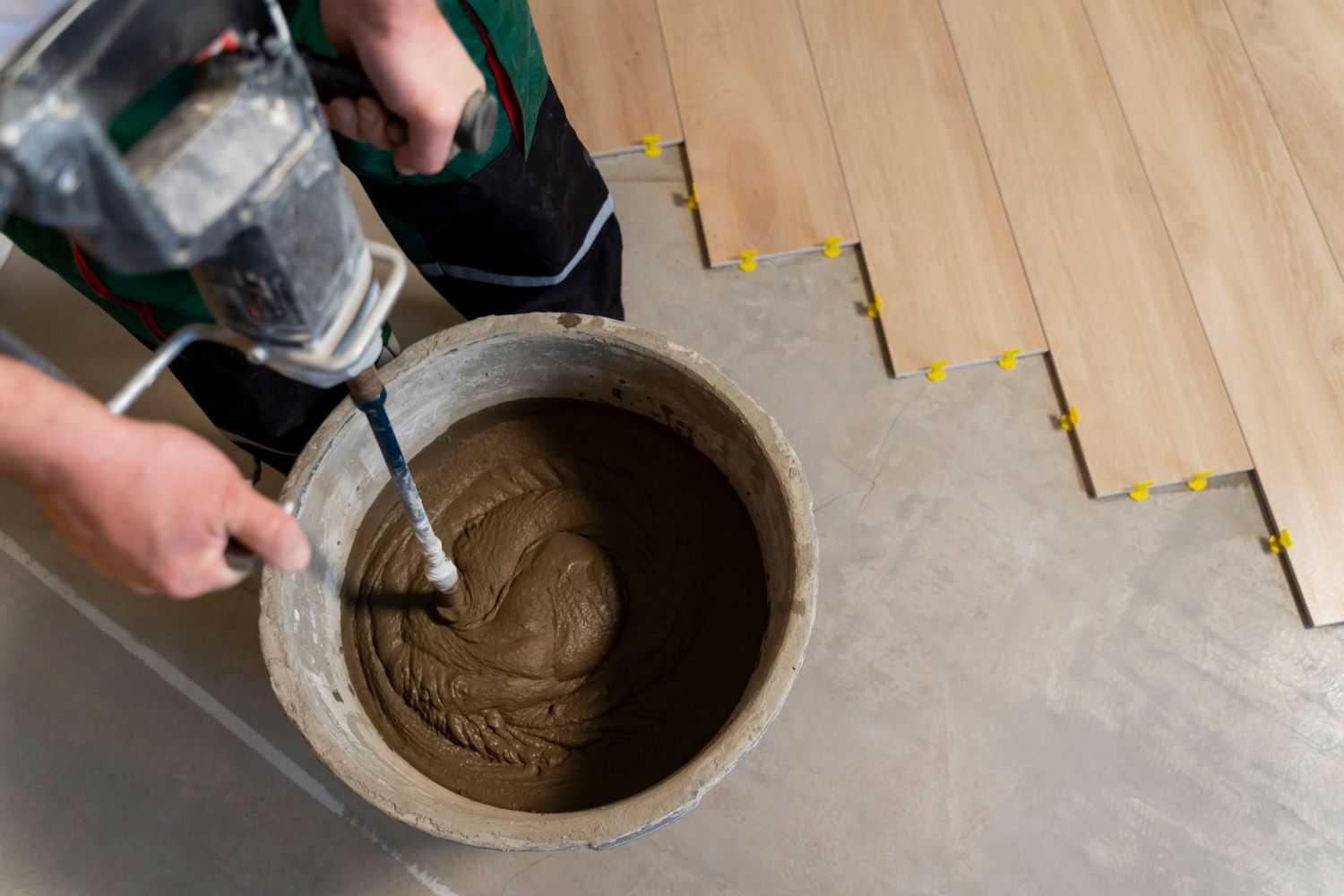
The glue-down method involves applying a continuous layer of a specially formulated flooring adhesive (either urethane or acrylic-based) directly to the subfloor, onto which each plank is then set and pressed. This creates a 100% bond across the entire back surface of the wood.
The Core Principle: The floor becomes a monolithic unit bonded to the subfloor, with no mechanical fasteners. This method is the primary choice for concrete subfloors but is also used over wood.
Ideal Applications for Glue-Down Installation:
- Subfloor Type: Concrete slabs (basements, ground floors, commercial spaces) are the primary candidate. It is also perfectly suitable for wood subfloors.
- Flooring Type: Most commonly used for engineered hardwood flooring, but can also be used for solid strip flooring in some applications. It is often the only option for parquet or mosaic wood patterns.
- Project Scope: Ideal for slab-on-grade construction, basements, and over radiant heat systems where stability is paramount.
Advantages of the Glue-Down Method:
- Superior Stability: The full-spread bond dramatically reduces the potential for plank movement, cupping, or gapping. This makes it an excellent choice for areas with wider fluctuations in humidity or over in-floor heating.
- Eliminates Squeaks: Because the planks are fully adhered and cannot rub against fasteners or the subfloor, a properly glued installation is virtually squeak-proof.
- Suitable for a Variety of Subfloors: It is the go-to solution for installing wood directly onto concrete, opening up possibilities for basements and certain types of commercial spaces.
- Solid Feel: The complete adhesion creates an exceptionally solid, uniform feel underfoot with no bounce or hollow spots.
Head-to-Head Comparison: Key Decision Factors
To determine which method is "better," you must evaluate it against your specific project's criteria.
Subfloor Type:
- Concrete Slab: Glue-down is the only direct-install option. Nail-down is not possible.
- Wood Subfloor: Both methods are viable. Nail-down is traditional and often preferred for solid planks. Glue-down over wood offers enhanced stability and is a must for certain engineered products.
Flooring Product:
- Solid ¾” Hardwood: Nail-down is the standard, time-tested recommendation. Some manufacturers approve glue-down for their solid products.
- Engineered Hardwood: Check the manufacturer’s warranty. Many specify and warrant only a glue-down installation for optimal performance, especially for thinner wear layers or wider planks.
Stability and Environmental Factors:
- High Humidity Areas or Over Radiant Heat: Glue-down provides superior dimensional stability, minimizing the expansion and contraction that can lead to gaps or compression crowning.
- Areas with Standard, Controlled Humidity: Nail-down performs excellently and accommodates natural wood movement beautifully.
Acoustic and Tactile Qualities:
- For a traditional, slightly resonant feel, choose nail-down.
- For a modern, ultra-solid, and quiet feel, choose glue-down.
Installation & Future Considerations:
- Installation Skill & Cost: Nail-down is generally faster and can be less expensive in terms of labor and materials (adhesive is costly). Glue-down requires meticulous adhesive application and is more time-sensitive and messy.
- Potential for Repair/Replacement: Replacing a single damaged plank is typically easier in a nail-down floor. Glue-down planks are very difficult to remove individually without damage.
- Removability: A nail-down floor is somewhat easier to demo in the future. A glue-down floor is a more permanent commitment.
Final Verdict: Which is Better?
The answer is not a universal one; it is a conditional one.
- Choose Nail-Down Installation if: You are installing solid hardwood over a wood subfloor in a residential setting with a stable environment. It is the classic, proven choice that allows for natural wood behavior and offers easier future refinishing.
- Choose Glue-Down Installation if: Your subfloor is concrete, you are installing engineered hardwood (especially wide planks), your project involves in-floor heating, or you prioritize ultimate stability and a squeak-free, monolithic feel. It is the modern solution for challenging conditions.
The "better" method is the one that aligns with your specific substrate, your chosen flooring product’s manufacturer requirements, and your long-term performance expectations. Always consult your flooring supplier’s installation guidelines, as failing to follow them can void the warranty. By making an informed choice at the installation phase, you ensure that your beautiful hardwood floor is built on a foundation meant to last.