
Victorian Floorboards: Strip, Sand or Replace?
Victorian floorboards are among the most cherished features of London's period homes. But when they show their age—scarred, stained, or structurally compromised—homeowners face a critical decision: strip, sand, or replace? Each option has its place, and the right choice depends on the condition of the wood, the desired outcome, and the home's character. This article helps you understand the differences, weigh the pros and cons, and choose the path that best suits your Victorian floor.
Stripping: The Gentle Refresh
Stripping involves removing old finishes, wax, and surface grime without aggressive sanding. It is the gentlest approach, suitable for floors that are structurally sound but have accumulated layers of old polish, paint, or dirt.
When to Strip
- The floor has old wax or polish that has darkened and dulled
- There are layers of paint or varnish that need removal
- The wood itself is in good condition and does not need leveling
- You want to preserve as much of the original surface as possible
- The floor has not been heavily sanded before and has plenty of thickness
The Stripping Process
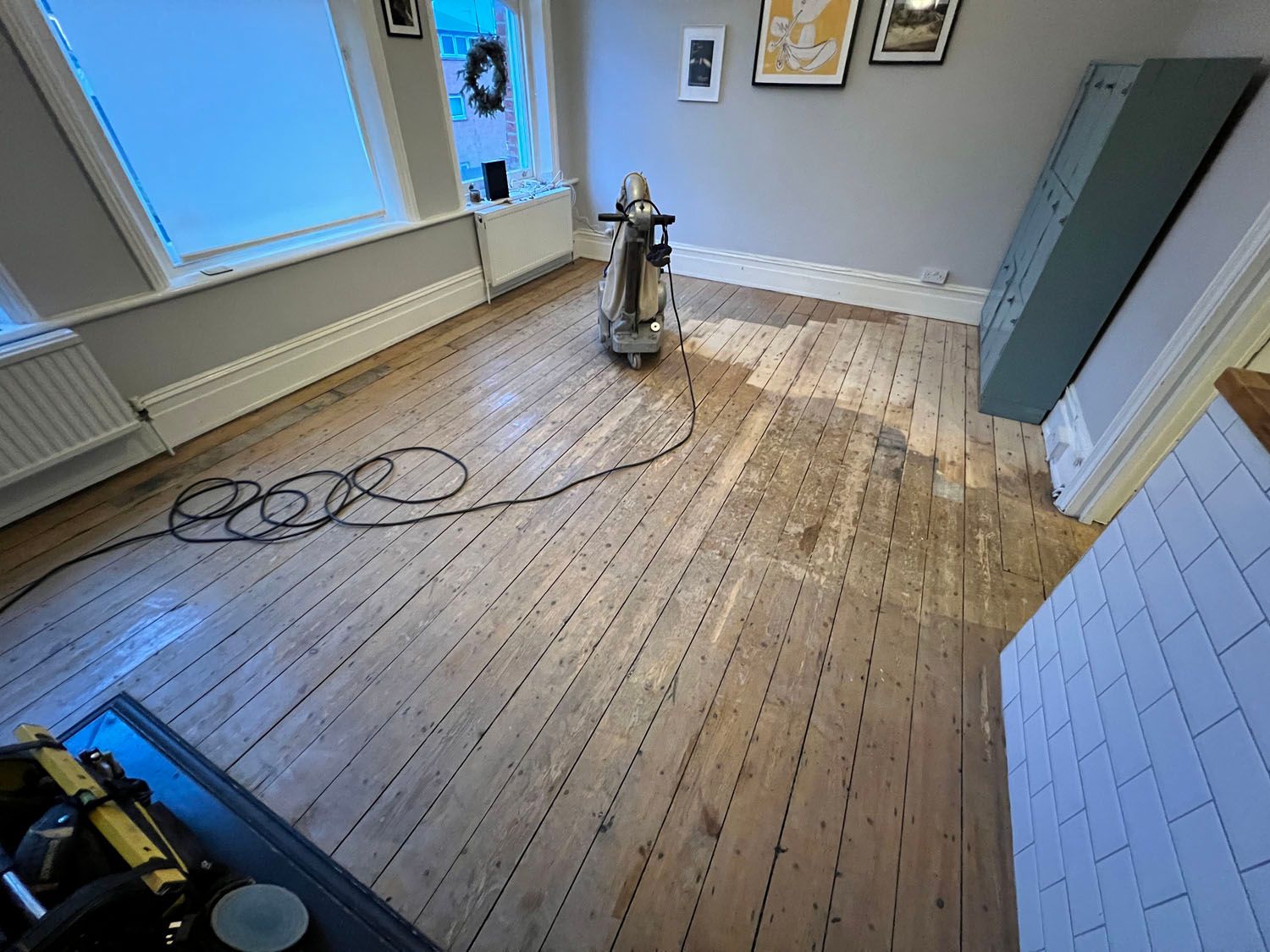
Chemical strippers are applied to dissolve old finishes. The softened residue is scraped away. Light sanding or buffing follows to smooth the surface. The result is a clean, refreshed floor that has lost minimal material.
Pros and Cons of Stripping
Pros:
- Removes minimal wood, preserving thickness
- Less dust than sanding
- Suitable for floors with historic finishes worth preserving
- Can be done room by room with less disruption
Cons:
- Does not level uneven boards or remove deep scratches
- Chemical strippers can be messy and require ventilation
- Not suitable for floors with severe damage or cupping
- May not achieve the fresh, uniform appearance some homeowners want
Sanding: The Full Refresh
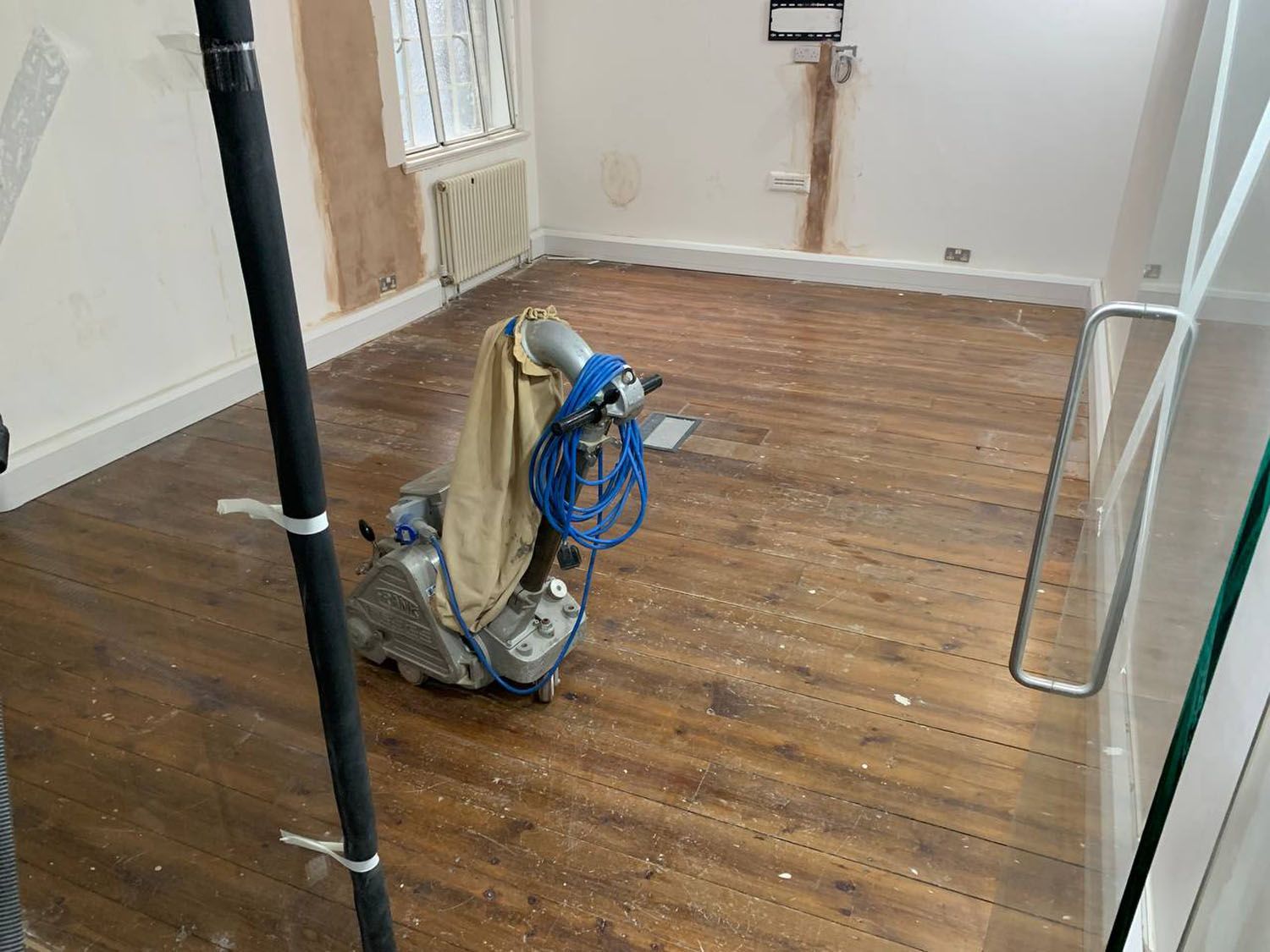
Sanding is the most common restoration method for Victorian floors. It removes the top layer of wood, eliminating old finishes, scratches, stains, and surface imperfections. It also levels minor unevenness and prepares the wood for a new finish.
When to Sand
- The floor has deep scratches, stains, or surface wear
- Old finishes are worn and uneven
- The floor has minor cupping or unevenness that can be leveled
- You want a fresh, consistent surface for a new finish
- The boards have sufficient thickness above the tongue and groove
The Sanding Process
The floor is sanded using progressively finer grits. Coarse grits remove old finishes and level the surface. Medium grits smooth the wood. Fine grits prepare for finishing. Between grits, the floor is vacuumed. After sanding, gaps may be filled, and the chosen finish is applied.
Pros and Cons of Sanding
Pros:
- Removes all surface imperfections and old finishes
- Creates a fresh, uniform surface
- Prepares the wood for the best finish adhesion
- Can extend the life of the floor significantly
Cons:
- Removes 1-2mm of wood, reducing the remaining wear layer
- Creates significant dust (not if "Dust-Free" method is used)
- Requires more preparation and clearing of the room
- Not suitable for floors that have been sanded too many times
- Can remove the patina and character of aged wood if overdone
Replacement: The Fresh Start
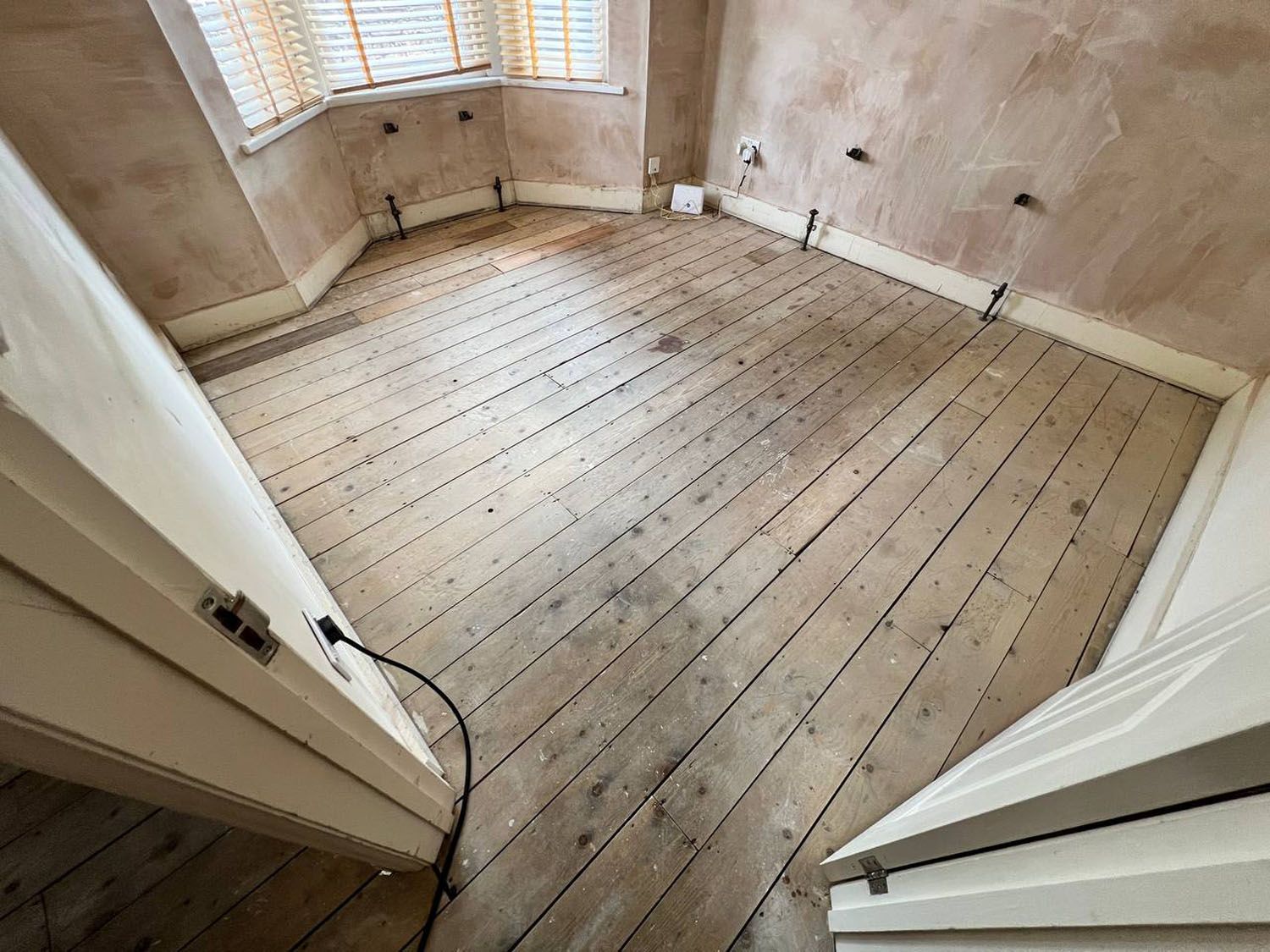
Replacement involves removing the existing floorboards and installing new ones. This can be done with reclaimed Victorian boards (to maintain period character) or new timber (for a fresh, uniform appearance).
When to Replace
- The boards are too thin to sand (tongue and groove exposed)
- There is extensive rot or woodworm damage
- The floor has been sanded too many times previously
- Large sections are missing or badly damaged
- Structural issues in the subfloor require full access
The Replacement Process
The existing floor is carefully lifted, preserving any salvageable boards for reuse. The subfloor is inspected and repaired if necessary. New boards are installed, either reclaimed or new. The new floor is then sanded and finished to match the desired aesthetic.
Pros and Cons of Replacement
Pros:
- Solves all structural and cosmetic issues
- Allows for changes to layout, underfloor heating, or insulation
- Can match the period character with reclaimed boards
- Provides a clean slate with full thickness for future sanding
Cons:
- Most expensive and disruptive option
- Reclaimed boards may be hard to source in matching condition
- New timber lacks the patina and character of original boards
- Requires significant time and coordination with other trades
- May affect the historical value of the property
How to Decide: A Practical Framework
Consider these questions to guide your decision:
- What is the condition of the boards above the tongue and groove? If they are thin, sanding may not be safe.
- Is the damage structural or cosmetic? Rot and woodworm require replacement. Scratches and stains can be sanded.
- What is your budget? Stripping is cheapest. Sanding is moderate. Replacement is most expensive.
- How much character do you want to preserve? Stripping preserves the most. Sanding removes the top layer. Replacement starts fresh.
- Are you planning underfloor heating or other changes? Replacement allows these. Sanding and stripping do not.
- What is the long-term plan for the property? If you are staying, invest in the best solution. If selling soon, consider the most cost-effective.
The Professional Difference
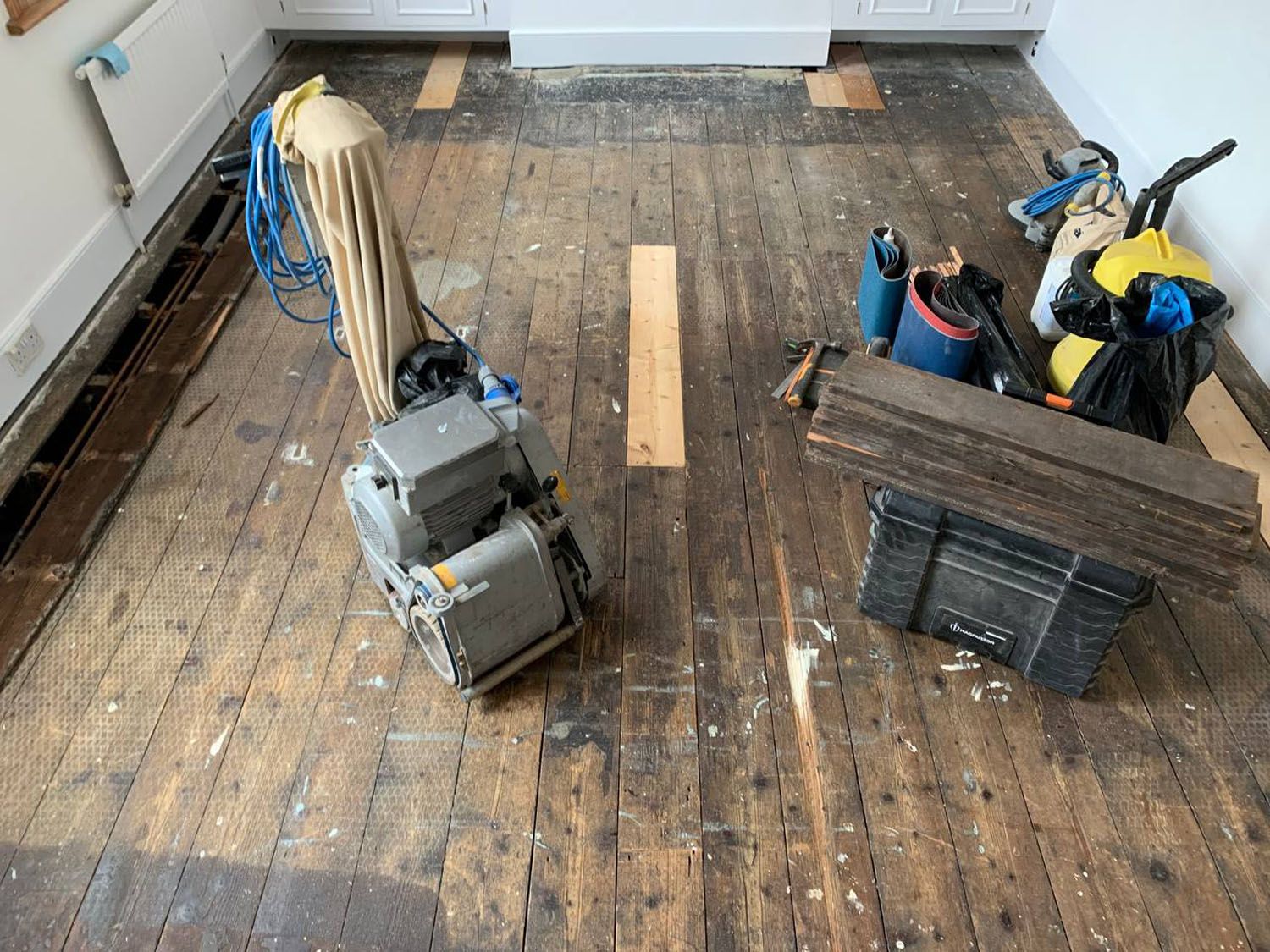
Evaluating a Victorian floor requires specialist knowledge. Professionals can:
- Measure the remaining thickness above the tongue and groove
- Identify the extent of woodworm or rot
- Advise on the best approach for your specific floor
- Source matching reclaimed timber if replacement is needed
- Apply finishes that suit the period and your lifestyle
Attempting to evaluate these factors without experience risks choosing the wrong option—and potentially damaging the floor permanently.
Conclusion
Strip, sand, or replace? There is no single right answer. Each Victorian floor is unique, and the best choice depends on its condition, your goals, and your budget. Stripping is gentlest and cheapest but limited in results. Sanding offers a full refresh but removes material. Replacement is most comprehensive but most expensive and disruptive.
The common thread is professional guidance. A specialist who understands Victorian floors can assess the condition, advise on the most appropriate approach, and execute it to the highest standards. Your floor has lasted over a century. With the right decision now, it will last another.