Our blog

Restoring Original Wooden Floors in Headingley Victorian Terraces

Original Victorian floorboards in Headingley terraces can be restored, not replaced. Learn how to inspect, repair, and finish them without losing period character.

Headingley is one of Leeds' most distinctive Victorian suburbs. Its terraced streets, built primarily between 1880 and 1900, retain much of their original character—including, in many cases, the original pine floorboards. These boards have witnessed over a century of life. They carry the marks of generations, the patina of age, and the unmistakable warmth of old timber. But they also carry wear, gaps, stains, and sometimes damage. If you own a Victorian terrace in Headingley, you may be wondering: can these original floors be saved? The answer is often yes—but restoration requires care, expertise, and respect for the material. This article explains how to restore original wooden floors in Headingley Victorian terraces while preserving their period character.

Are the Original Floorboards Worth Saving?

Before any work begins, it's essential to assess whether the original boards can be restored. In many cases, they can. Here are the signs that restoration is viable:

  • Sufficient thickness – the boards have enough material above the tongue and groove for sanding
  • Localised rather than widespread damage – problems are isolated, not affecting the entire floor
  • No active rot – the wood is structurally sound
  • Loose boards can be re-secured – movement is fixable with screws or additional fixings
  • Replacement boards can be matched – reclaimed pine of similar age is available

If your floor meets these criteria, restoration is likely a practical and worthwhile option.

Common Problems in Victorian Floorboards

Victorian floors develop a range of issues over time. Understanding these helps you know what to expect during restoration.

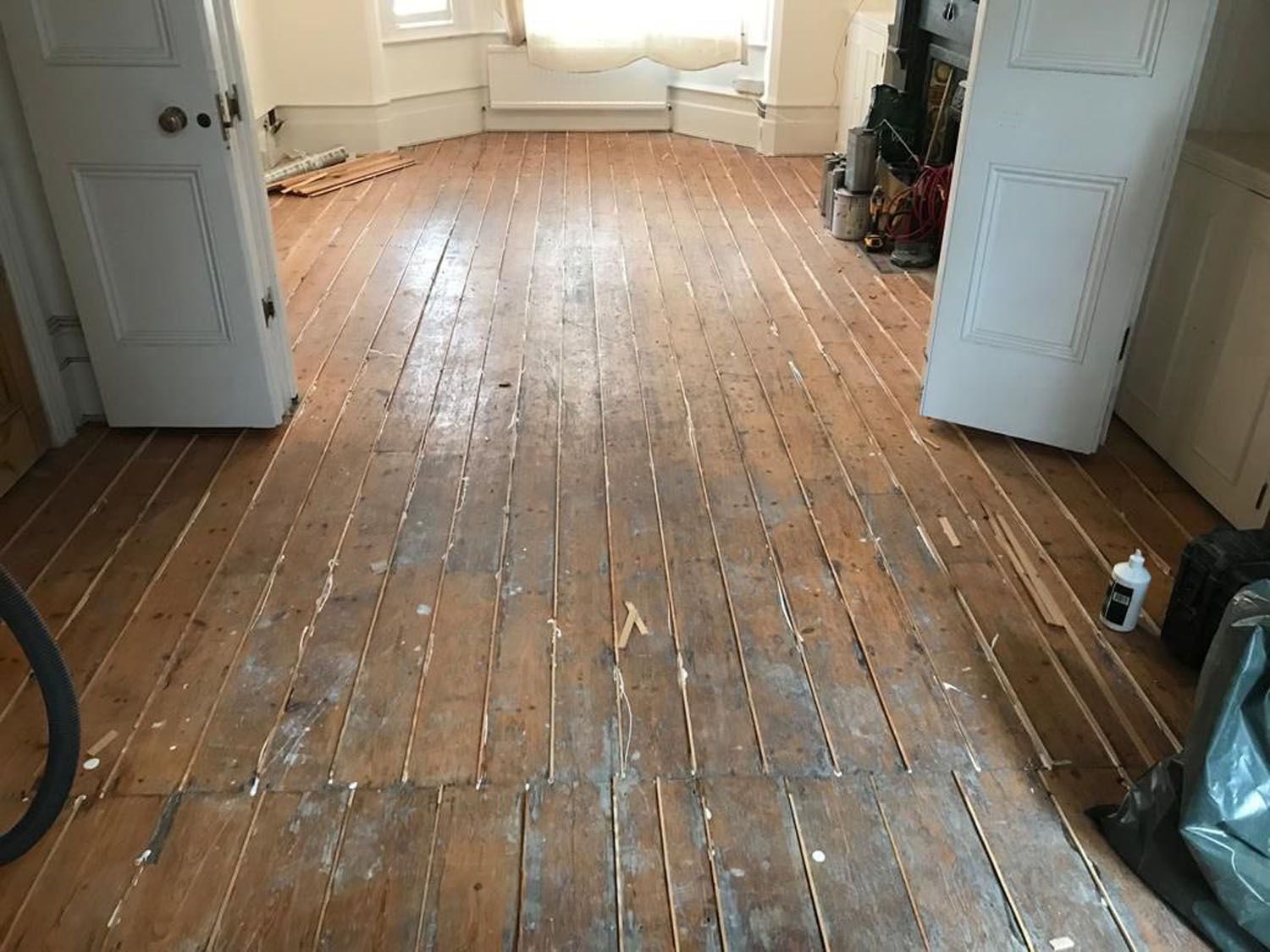
Wide gaps

seasonal movement and age create spaces between boards. These gaps are a natural feature of old pine floors, resulting from decades of expansion and contraction as the wood responds to changes in humidity.

Draughts

cold air rises through gaps from the subfloor void. This is a common issue in suspended timber floors, where air circulates beneath the boards and finds its way through even small openings.

Squeaking

loose boards rubbing against nails or adjacent boards. Squeaks are caused by friction between moving parts of the floor, often indicating fixings that have worked loose over time.

Split edges

brittle wood cracking along board edges. As pine ages, it becomes more brittle, and the edges of boards can split, particularly near nails or in high-traffic areas.

Cut boards

sections removed for plumbing or wiring access. Previous renovations often involved cutting boards to reach pipes or cables, leaving unsightly gaps that were rarely restored properly.

Old paint

layers of paint from previous decorative schemes. Many Victorian floors were painted around the edges where carpet did not cover, leaving stubborn paint that requires careful removal.

Blackened nail areas

corrosion stains around old nails. Over time, old nails react with moisture in the wood, creating dark, unsightly stains that spread into the surrounding timber.

Inconsistent replacement boards

mismatched timber from past repairs. Repairs carried out at different times often used different types of wood, leaving a patchwork appearance that stands out from the original floor.

Damage around fireplaces

wear from heat, ash, and foot traffic. The area near the fireplace experienced the most use, including heat exposure, ash spills, and generations of people standing and gathering.

Carpet gripper holes

rows of holes from previous carpet installations. Gripper rods were nailed around the perimeter of rooms, leaving visible holes that remain after the carpet is removed.

photo_695@03-11-2025_00-40-54.jpg

Each of these issues can be addressed during restoration, though some require more work than others.

Problem Likely Cause Typical Treatment When Further Investigation Is Needed
Squeaking Movement between board and joist Secure carefully Suspected joist movement
Wide gaps Seasonal movement or historic shrinkage Pine slivers or suitable filler Unstable boards
Split boards Age, fixings or previous lifting Local repair or replacement Widespread weakness
Dark marks Old moisture or metal reaction Test sanding and assessment Active moisture
Draughts Open gaps and suspended floor Gap filling Ventilation concerns

The Restoration Process

Restoring a Victorian pine floor is a step-by-step process. Each stage builds on the previous one, and skipping steps compromises the final result.
Inspection

Inspection

A thorough assessment of the floor's condition, including board thickness and structural integrity

Checking board thickness

Checking board thickness

Measuring the remaining wood above the tongue and groove

Locating services

Locating services

Identifying any pipes, cables, or services beneath the floor

Removal of nails or fixings

Removal of nails or fixings

Punching nails below the surface or removing inappropriate fixings

Local board repair

Local board repair

Fixing minor damage, splits, or loose sections

Replacement with matching reclaimed pine

Replacement with matching reclaimed pine

Where boards are beyond repair, sourcing aged timber that matches the original

Gap filling

Gap filling

Using flexible resin or timber slivers where gaps are bothersome

Staged sanding

Staged sanding

Progressive grits to remove old finishes and level the surface

Test patches

Test patches

Applying finish samples to check colour and appearance

Sealing, staining or oiling

Sealing, staining or oiling

Applying the chosen finish to protect and enhance the wood

Preserving Character Without Leaving the Floor Unfinished

One of the biggest concerns during restoration is losing the character of an old floor. It's a valid concern. Over-sanding can erase the patina, the gentle wear patterns, and the marks of history that make Victorian floors special.

Understanding the difference between character and damage helps guide decisions. Character refers to the patina, worn areas near fireplaces, subtle colour variations, and historic nail holes that give an old floor its unique personality. Patina is the warm, aged surface that develops naturally over decades of use and exposure. Defects are structural issues that compromise the floor's integrity, such as loose boards or split edges. Dirt is embedded grime that can be removed without damaging the wood. Structural damage includes rot, woodworm, or cracks that require intervention to prevent further deterioration.

A good restoration preserves character while addressing defects and removing dirt. It does not aim for a pristine, factory-new appearance. After restoration, each board will not be identical in colour. Some variation is normal and desirable.

Choosing a Finish for a Victorian Terrace
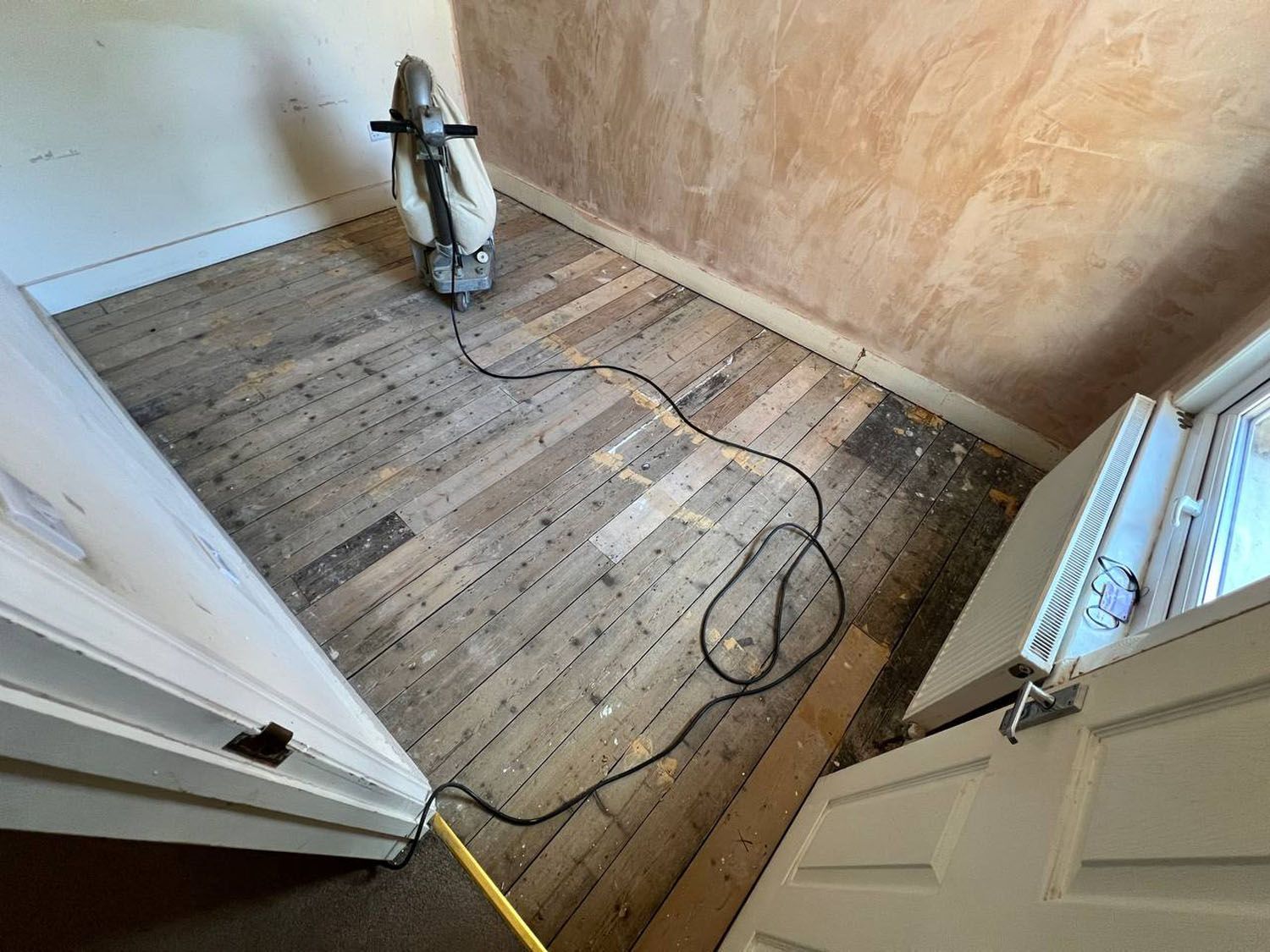
photo_644@18-05-2025_10-53-31.jpg

The finish you choose affects appearance, durability, and maintenance. Options include:

  • Clear lacquer – durable but can look plastic
  • Matt lacquer – durable with a more natural look
  • Hard wax oil – natural, breathable, easy spot-repair
  • Wood oil – traditional, requires regular maintenance
  • Light stain – adds subtle colour, keeps floor light
  • Dark stain – historically accurate but tricky on pine
  • Lime or whitening effects – pale, beachy, contemporary

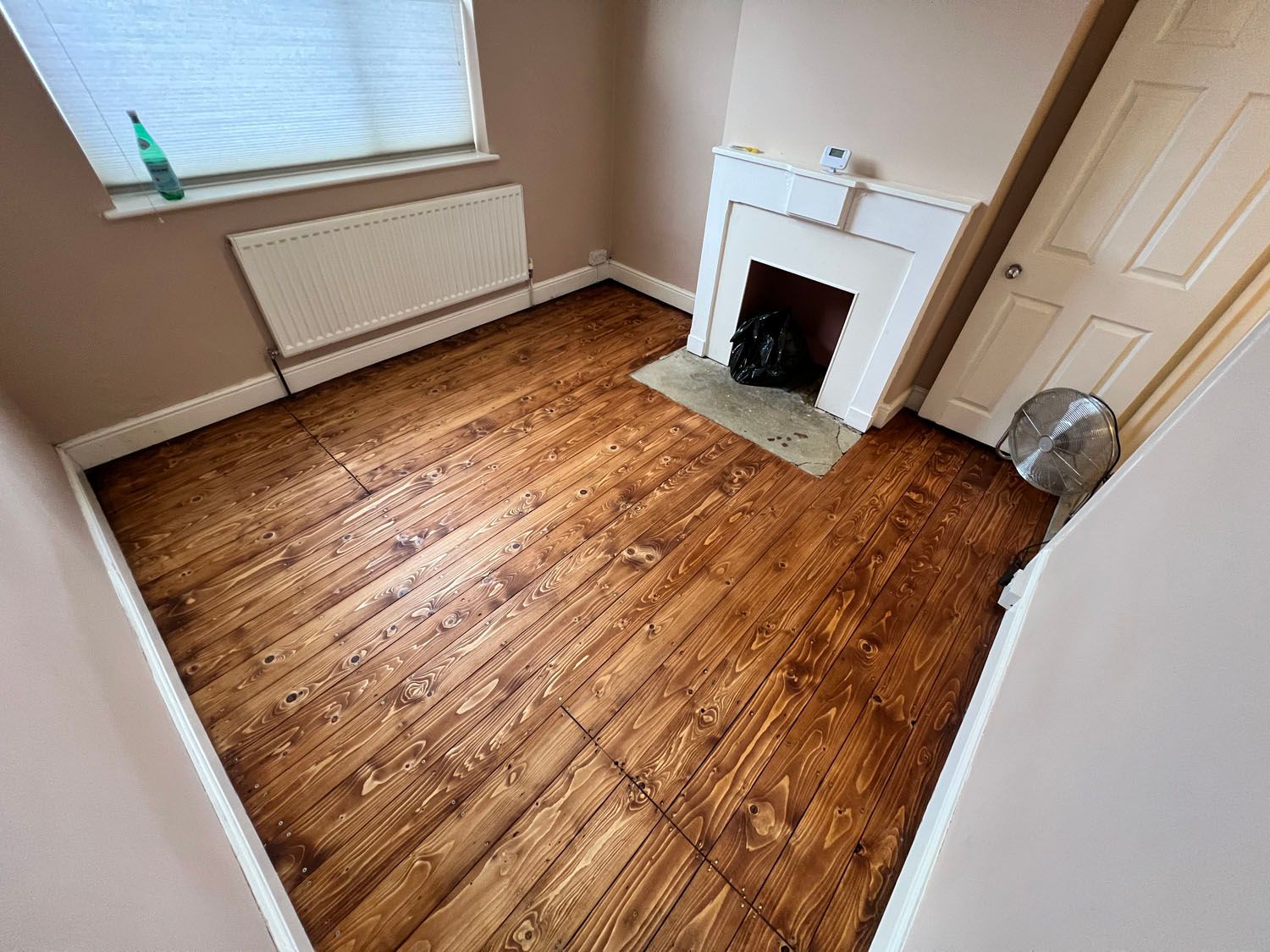
Hard wax oil is often the most sympathetic choice for Victorian pine. It looks natural, feels warm, and allows the wood to breathe. Dark stains are historically accurate but can be blotchy on pine without professional preparation.

When Replacement Is Better Than Sanding

Sometimes restoration is not the best option. Replacement may be necessary when:

  1. Severe rot – wood is soft, crumbly, structurally compromised
  2. Extensive woodworm – boards riddled with holes and weakened
  3. Boards too thin – insufficient material above the tongue
  4. Structural failure – joists or subfloor have failed
  5. Too many mismatched inserts – floor lacks coherence
  6. Unsafe contamination – substances that cannot be safely removed

In these cases, replacing the floor with reclaimed Victorian pine preserves period character while providing a sound, durable surface.


Frequently Asked Questions

Can all Victorian floorboards be sanded?

No. Sanding is only possible if the boards have sufficient thickness above the tongue and groove. An assessment is essential before any work begins.

Should gaps in old pine floors always be filled?

Can reclaimed pine boards be matched to the original floor?

Will sanding remove all dark stains?

How can draughts be reduced without damaging ventilation?

Which finish looks most natural on Victorian pine?

Every Victorian floor is unique. The condition of the boards, the extent of damage, and the desired outcome vary from property to property. Before deciding whether to sand, repair, or replace the original boards in your Headingley home, arrange a professional assessment. A site survey provides clarity, identifies any hidden issues, and ensures you make the right decision for your floor and your home.

Others articles