
Restoring Decorative Edwardian Parquet Patterns
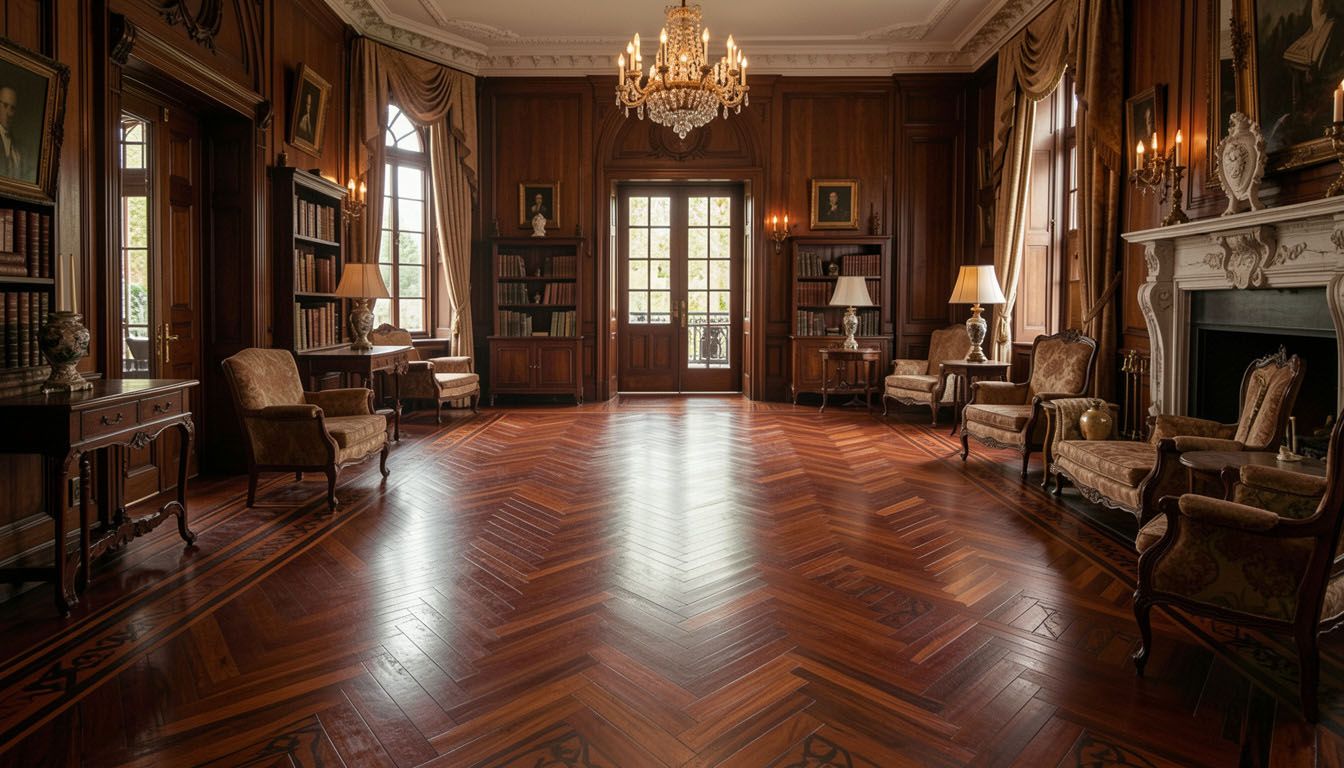
Few flooring types capture the elegance of the Edwardian era quite like parquet. Installed in the hallways, dining rooms, and reception rooms of London's finest homes between 1900 and 1914, these intricate geometric patterns were a mark of status and sophistication. Today, original Edwardian parquet is prized for its old-growth oak, tight grain, and irreplaceable character. But restoring it is a delicate art. The wrong approach can irreversibly damage blocks that have survived for over a century. This article explores how decorative Edwardian parquet is restored—from assessment and repair to specialist sanding techniques and finish selection.
The Anatomy of Edwardian Parquet
Edwardian parquet differs from modern versions in several key ways. Original blocks were typically solid oak, measuring roughly 230mm x 70mm x 20mm, laid in herringbone patterns directly onto bitumen-coated concrete or timber subfloors. The oak is old-growth timber—dense, tight-grained, and far superior in quality to most modern equivalents. This construction was designed to be durable and to withstand repeated sanding over generations.
The most common Edwardian pattern is herringbone, where rectangular blocks are laid at 90-degree angles to form a distinctive zigzag. Other patterns include chevron, basket weave, and block parquet, as well as elaborate bordered floors with contrasting wood inlays. Some high-specification homes featured decorative borders in darker woods like wenge or mahogany.
However, Edwardian parquet also has its vulnerabilities. The original bitumen adhesive used to secure blocks can dry out and fail after a century, causing blocks to lift. The blocks themselves, typically around 20mm thick, may have been sanded multiple times previously, leaving a thinner wear layer. And moisture—from spills, flooding, or rising damp—can cause cupping, warping, and staining.
Assessment and Structural Preparation
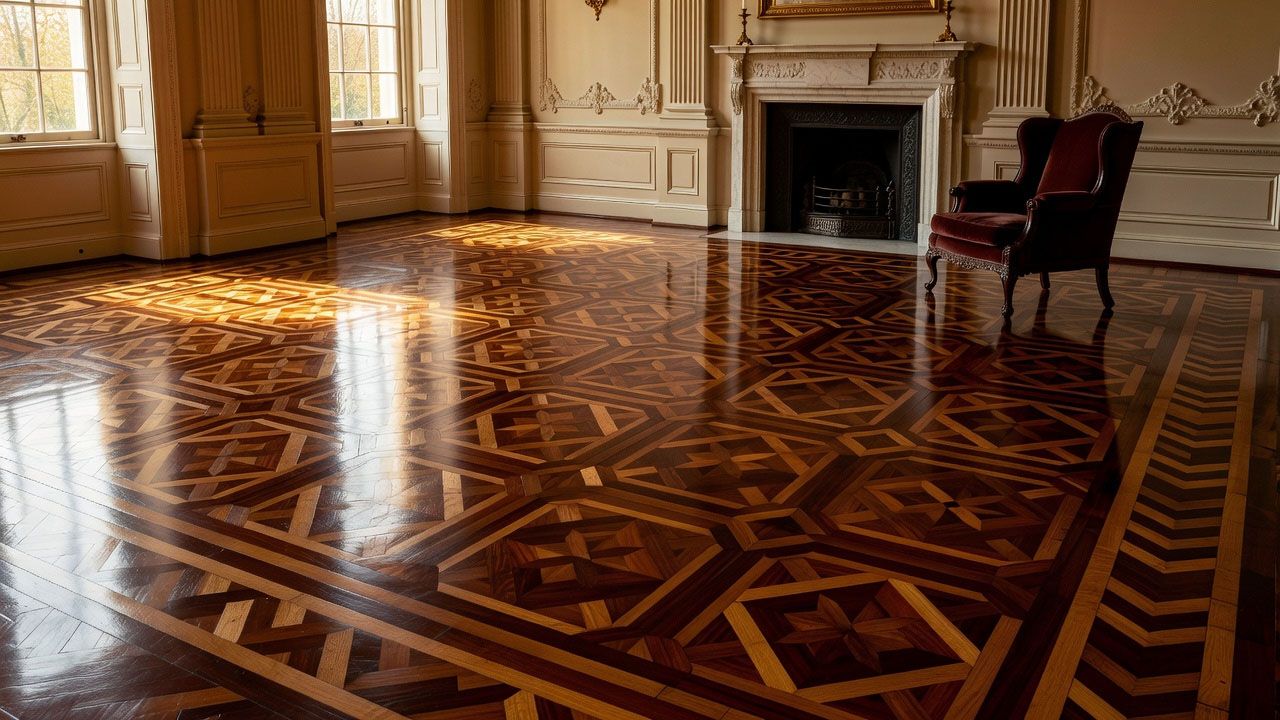 Before any sanding takes place, a thorough assessment is essential. Professionals check for:
- Loose or lifting blocks—these must be re-adhered before sanding, as sanding over unstable blocks causes further movement and an uneven finish
- Missing or damaged blocks—replacement blocks must be sourced from reclaimed stock, matching the original species, size, and grain character
- Moisture damage—cupped or bowed blocks require drying time before any sanding begins
- Subfloor condition—the underlying concrete or timber subfloor must be level and sound
Structural repair is always the first stage. Loose blocks are lifted cleanly, old bitumen residue is removed, and the subfloor is prepared. Modern flexible adhesives, such as moisture-curing polyurethane, provide a stronger bond than the original bitumen and accommodate seasonal timber movement. Reclaimed blocks are sourced from specialist suppliers or salvage yards to match the existing floor as closely as possible.
The Specialist Sanding Challenge
Sanding parquet is fundamentally different from sanding standard floorboards. In a herringbone pattern, adjacent blocks are laid at 90 degrees to each other. There is no single direction in which a sander can run parallel to the grain of every block. Sanding directly against the grain of any block tears the timber fibres, leaving permanent marks.
The solution is diagonal sanding—typically at 45 degrees to the main laying axis. At this angle, the sander crosses the grain of every block at the same diagonal, removing material evenly across the entire pattern. This requires:
- Precise angle-setting maintained consistently across the entire floor area
- Specialist rotary or multi-disc sanders rather than aggressive belt sanders
- Careful edge work—areas around doorways, hearths, and skirting boards are sanded by hand or with detail sanders, following the same diagonal approach
- Multiple passes through progressively finer grits, from coarse to fine, all running at the diagonal
For chevron parquet, where blocks are cut at an angle so that adjacent rows meet in a straight line, the sanding angle is adjusted to 45 degrees to the chevron's central spine rather than to the room axis.
Repairing Gaps and Imperfections
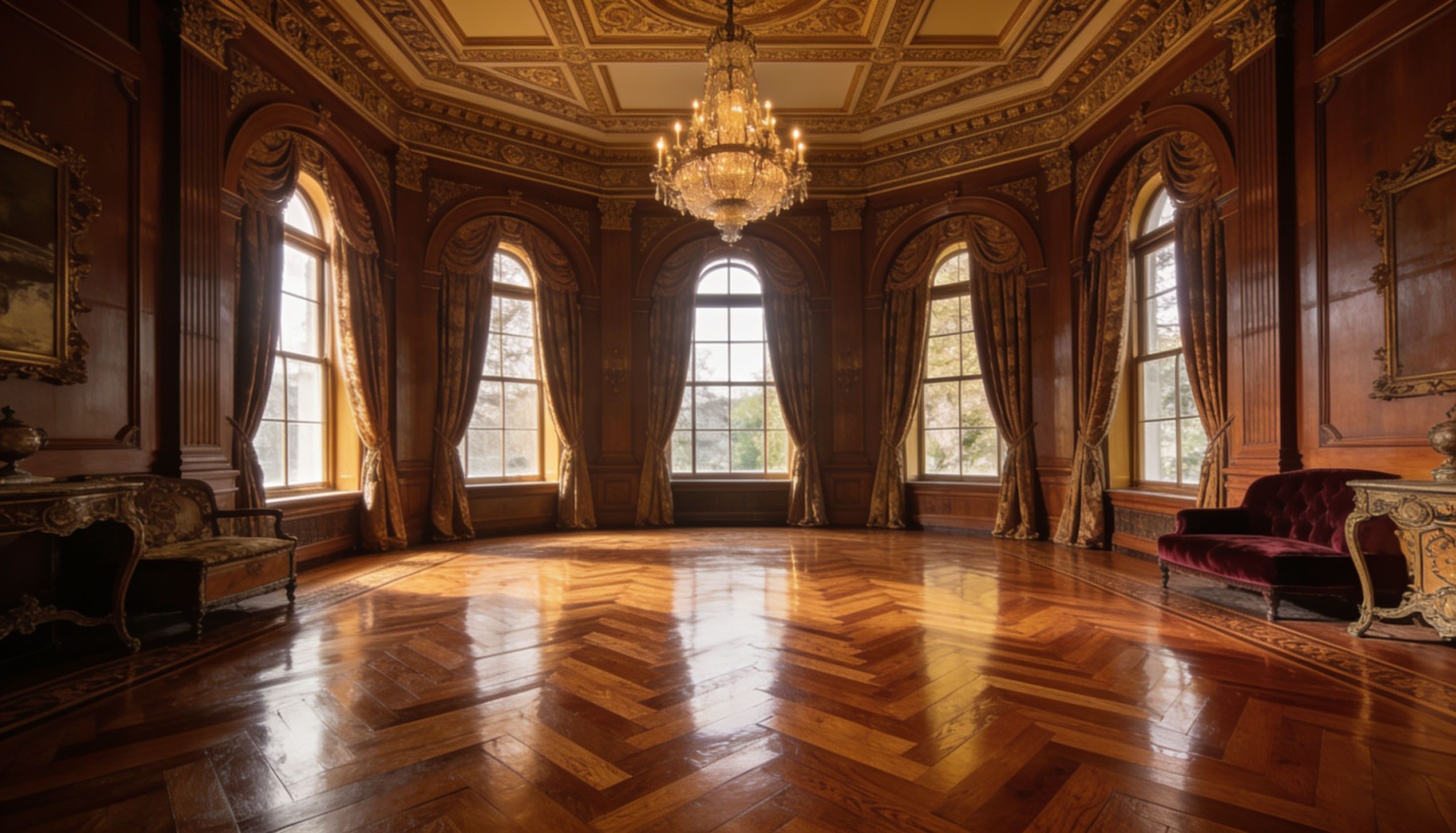 After sanding, any gaps between blocks are addressed. Small gaps—up to 1-2mm—are often best left alone. Wider gaps are filled with a flexible resin mixed with fine oak dust produced during sanding, coloured to match the block faces. Rigid fillers are avoided as they crack when the wood moves seasonally.
Finish Selection for Period Parquet
The finish applied to Edwardian parquet significantly affects its appearance and longevity.
Hard-wax oil is often the most sympathetic choice. It penetrates the timber fibres, enhancing the natural grain variation and colour depth of the individual blocks. Unlike lacquer, it allows the pattern's three-dimensional visual quality to show through, with adjacent blocks catching light slightly differently. Hard-wax oil is also easier to spot-repair between full sandings.
Water-based lacquer offers greater durability, particularly in high-traffic hallways or commercial environments. Extra-matt lacquer provides the best compromise—preserving a natural appearance while offering scratch and spill resistance.
Traditional wax was the original finish used on Edwardian parquet. It produces the most authentic, characterful result but requires regular maintenance and offers less protection against moisture and wear.
For original Edwardian oak, penetrating oils are typically preferred over heavy film-forming finishes. They allow the wood to breathe and highlight the unique grain character of century-old timber.
The Value of Professional Expertise
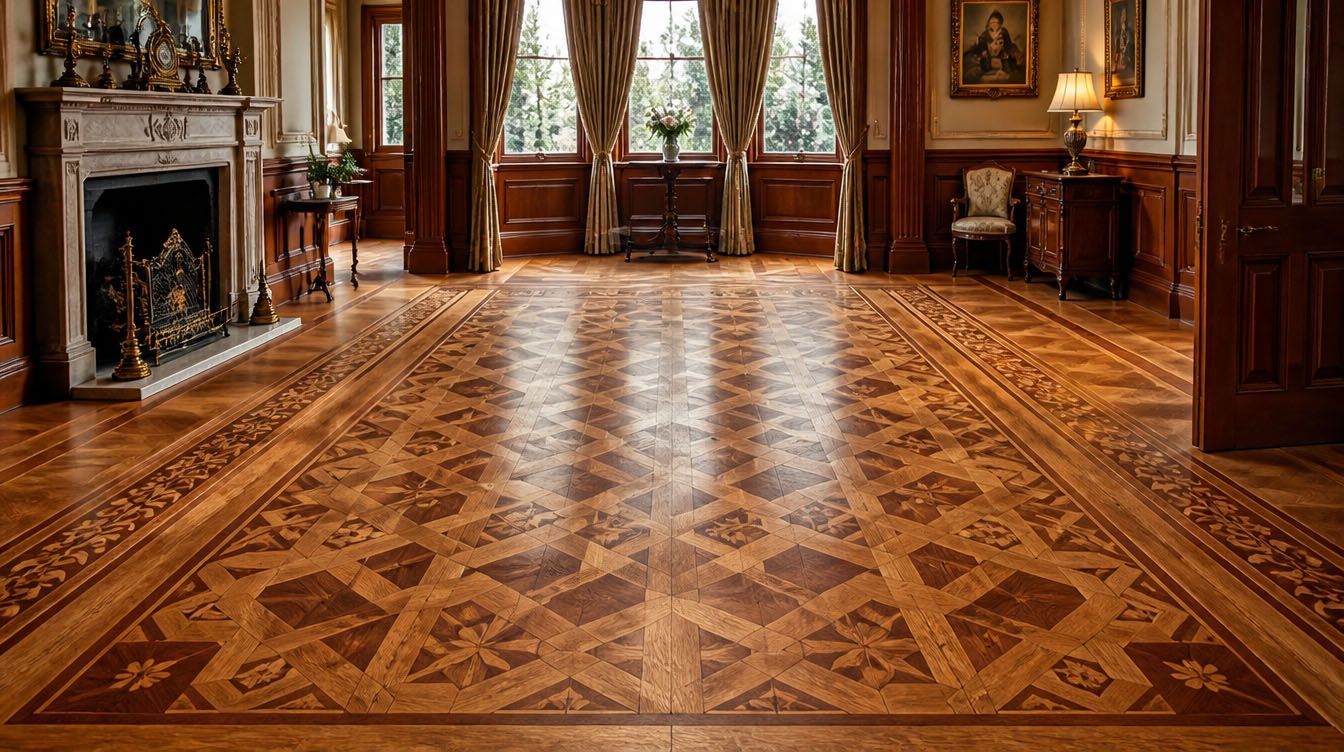 Restoring decorative Edwardian parquet is not a DIY project. The combination of patterned grain, varying block sizes, original adhesives, and limited wear layer thickness demands specialist knowledge. Professionals who work regularly with period parquet understand the correct sanding angles, have access to matching reclaimed timber, and know how to assess structural soundness. Attempting to sand parquet without this knowledge risks damaging blocks beyond repair—a costly mistake that can destroy a floor's historical character permanently.
A properly restored Edwardian parquet floor will last for generations to come, carrying forward the craftsmanship and elegance of a bygone era.