
Edwardian vs Victorian Floors: What’s the Difference?
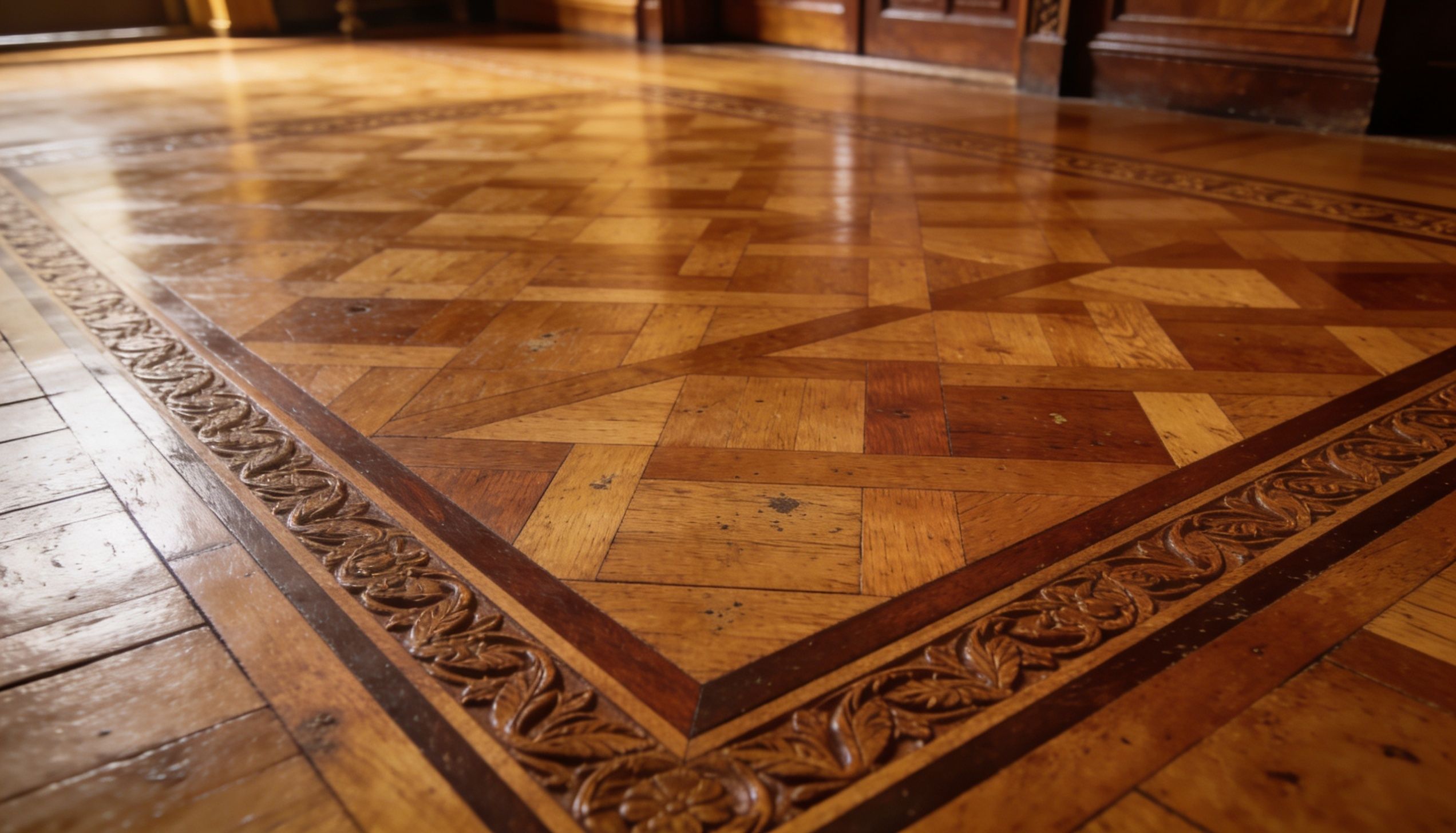
At first glance, Edwardian and Victorian wooden floors look quite similar. Both feature narrow planks of softwood. Both have darkened with age. Both carry the marks of decades of use. But look closer, and the differences become clear. The two eras produced floors with distinct characteristics, from the width of the boards to the way they were laid and finished. Understanding these differences matters whether you are restoring a period property, buying a home, or simply trying to identify what lies beneath your carpets. This article compares Victorian and Edwardian floors, highlighting what makes each unique.
Board Width: The Most Obvious Difference
Victorian floorboards. Typically narrow, measuring 3 to 4 inches in width. Builders used whatever timber was available, often mixing widths within the same room. The narrow planks reflect the economics of the time—smaller boards were cheaper and easier to handle.
Edwardian floorboards. Generally wider, often 5 to 7 inches across. The Edwardian period saw improvements in sawmilling technology, allowing wider boards to be cut more consistently. Wider planks also suited the growing preference for lighter, airier interiors.
If you can measure your boards, width alone often indicates the era. Boards under 4 inches wide suggest Victorian. Boards over 5 inches suggest Edwardian or later.
Wood Species: Pine vs. Deal
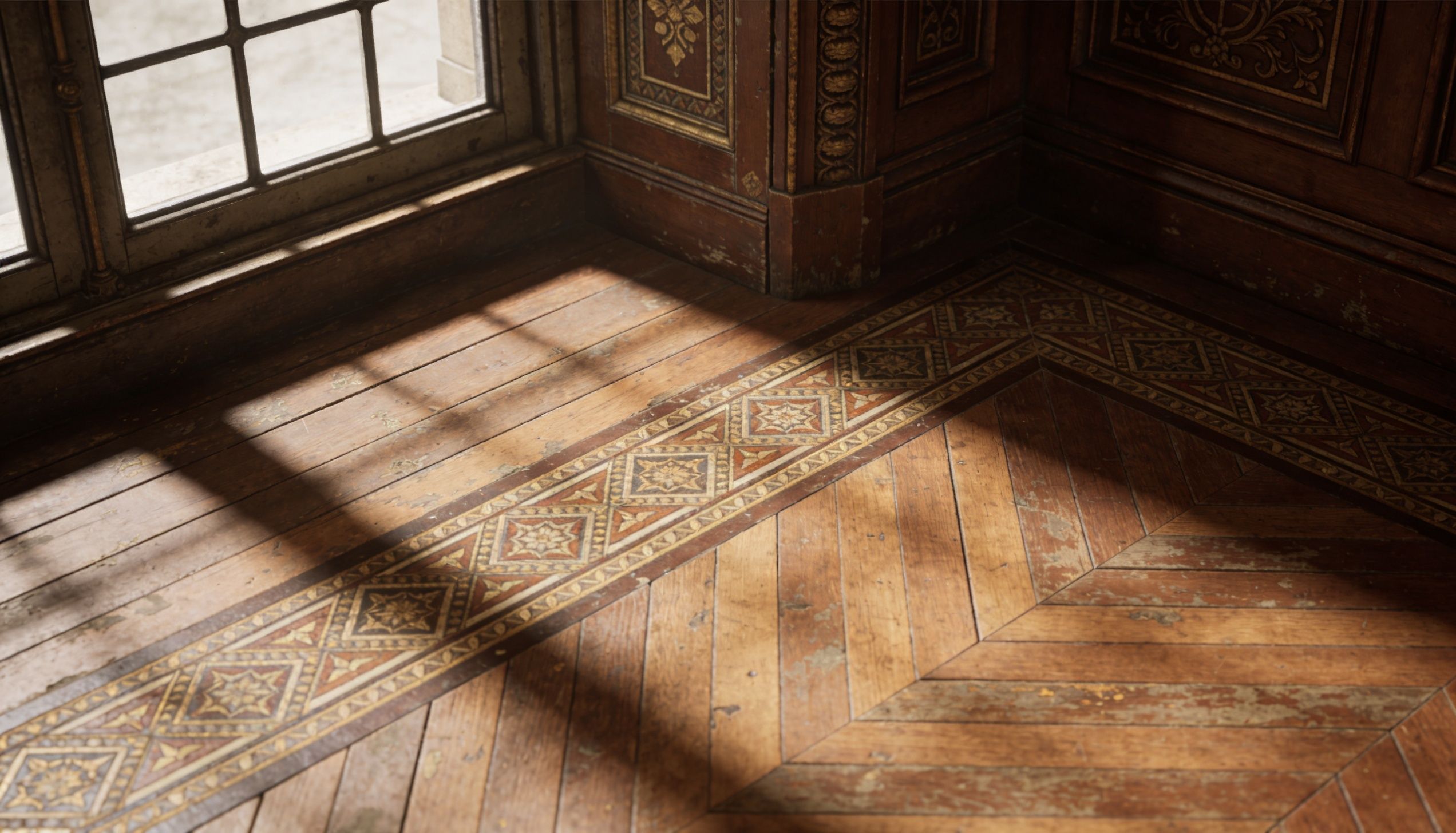 Both eras used softwood almost exclusively. Hardwood was reserved for public buildings, churches, and the wealthiest homes. But the specific types of softwood differed.
Victorian floors. Typically pine, often Scots pine. This wood has prominent grain patterns, distinct knots, and a warm, golden-brown colour when freshly sanded. It is relatively soft and dents fairly easily.
Edwardian floors. Often deal, a term that historically referred to softwood imported from Northern Europe, particularly Norway and Sweden. Deal is slightly denser and paler than pine, with less pronounced grain. It was prized for being more uniform in appearance.
In practice, distinguishing pine from deal requires experience. Both have been stained and aged over a century. But the slightly tighter, straighter grain of deal often points to an Edwardian origin.
Layout and Orientation
Victorian floors. Boards run parallel to the front of the house, from the party wall toward the street and rear. In ground floor reception rooms, the boards typically run lengthways down the room, drawing the eye toward the fireplace. Hallways often have boards running across the width of the corridor.
Edwardian floors. Similar orientation but with more variation. The desire for light and space led some builders to lay floors diagonally in hallways or to use herringbone patterns in more expensive homes. Parquet flooring became more common in Edwardian entrance halls.
Subfloor and Construction
Victorian construction. Floorboards sit on joists suspended over a ventilated crawl space. Air bricks in the external walls allow airflow to prevent damp. Joists are typically rough-sawn, spaced about 16 inches apart. Gaps between boards were expected—carpets covered them.
Edwardian construction. Similar suspended timber system but with improvements. Joists are often closer together. Boards are more consistently thicknessed. Subfloor ventilation is better understood and implemented.
The better construction of Edwardian floors often means they have survived in flatter, more stable condition than Victorian floors. They tend to require less remedial work during restoration.
Nails and Fixings
Victorian floors. Square-cut, hand-driven nails. These nails have irregular heads and often rust over time. They were driven through the face of the board near the tongue. The irregular shape means they work loose more easily, causing squeaks.
Edwardian floors. Wire nails, machine-cut and more uniform. These hold better and rust less dramatically. Some Edwardian floors used secret nailing through the tongue, hiding the fixings entirely.
Finding visible nail heads across the surface suggests a Victorian floor. Edwardian floors may show fewer visible nails, particularly in better-quality installations.
Original Finish and Colour
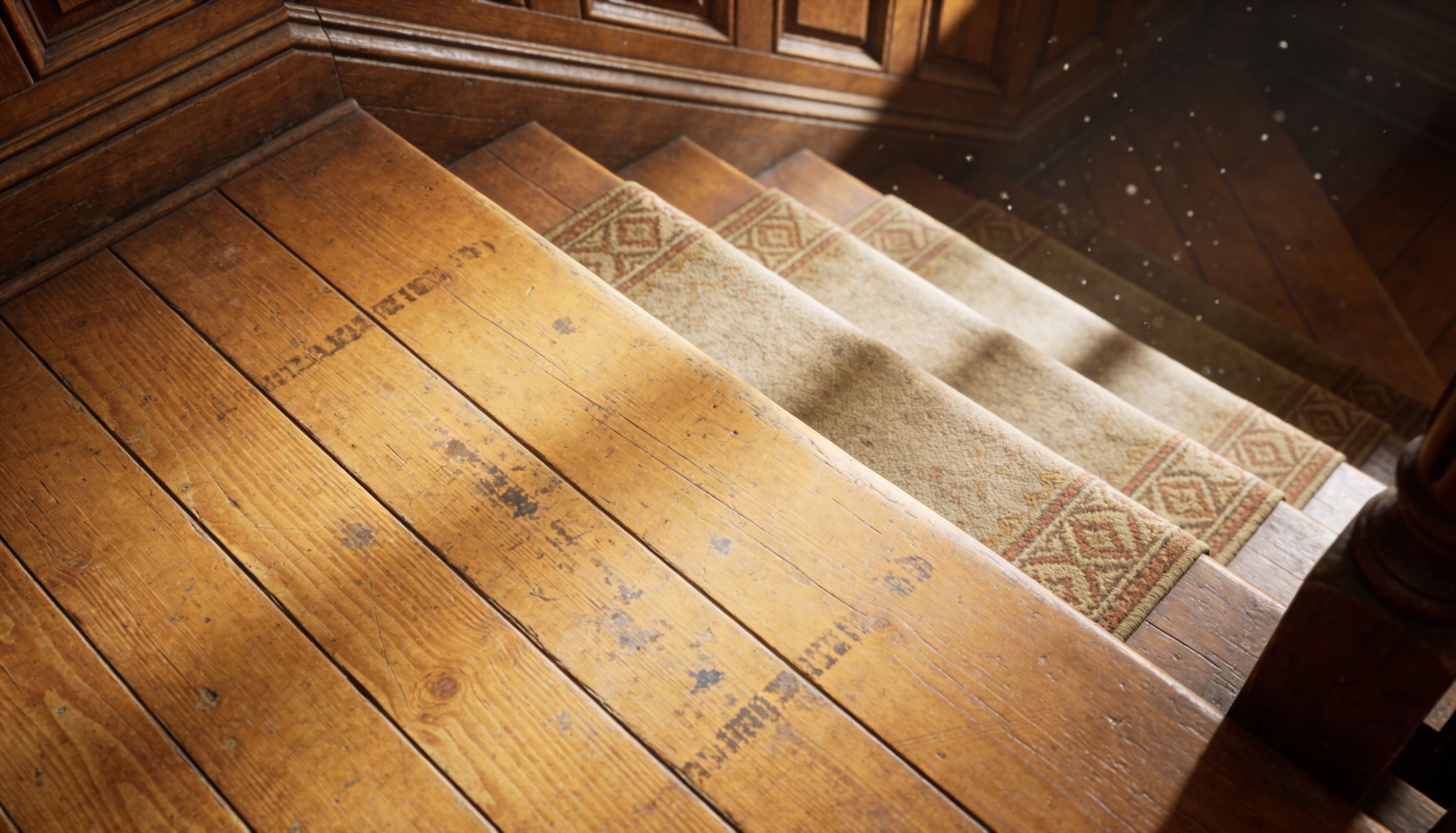 Victorian taste. Dark finishes dominated. Walnut, mahogany, and oak stains were popular, part of the general Victorian preference for rich, heavy, ornate interiors. Floors were typically waxed rather than varnished. The result was a deep brown floor with a soft, low sheen.
Edwardian taste. Lighter, more natural finishes emerged. The Edwardian era favoured airiness and simplicity. Floors were often stained in lighter oak tones or left closer to their natural colour. Whitewashing and liming techniques appeared in more fashionable homes.
When you lift a Victorian carpet, you often find very dark boards. Under Edwardian carpets, the wood tends to be noticeably lighter, even accounting for age-darkening.
Condition and Wear Patterns
Victorian floors. A century and a half of use leaves clear wear patterns. The floor is often most worn near the fireplace (where people gathered) and along the path from door to window. Boards may be cupped from historic damp. Gaps are more pronounced.
Edwardian floors. One or two decades less wear means they often survive in better condition. Floors are typically flatter, gaps smaller, and original finish more intact. The shorter period of central heating has also caused less drying and shrinkage.
Restoration Implications
The differences between Victorian and Edwardian floors affect how they should be restored.
For Victorian floors:
- Expect more gaps that need filling or accepting
- Be prepared for more rising nail heads to punch
- Anticipate cupping that may require careful drying
- Accept that the floor will never be perfectly flat
For Edwardian floors:
- The floor may need less aggressive sanding
- Original finishes may still be present and worth preserving
- Fewer structural issues mean faster restoration
- The floor can achieve a flatter, more uniform surface
Which Floor Is Better?
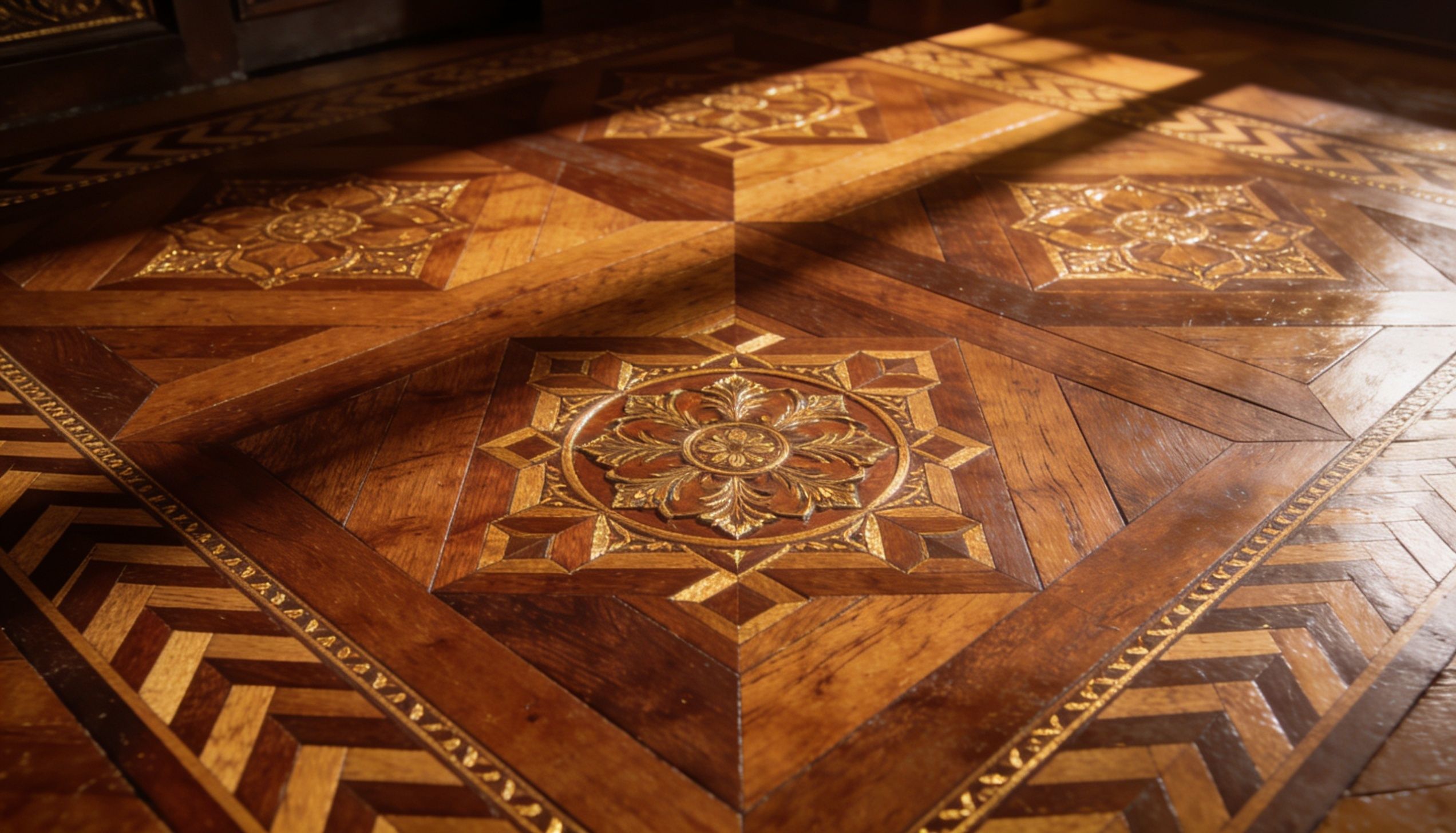 Neither is inherently better. They are simply different.
Victorian floors have more character. The narrow, uneven boards, the prominent nail heads, the deep staining—all tell the story of a century and a half of family life. They are not perfect, and that is the point.
Edwardian floors are more practical. Wider, flatter, and often in better condition, they offer a more uniform surface that suits contemporary tastes while retaining period authenticity.
For homeowners, the era of your floor should guide your restoration approach. Trying to make a Victorian floor look Edwardian (flat, uniform, light) requires aggressive sanding that destroys its character. Trying to make an Edwardian floor look Victorian (dark, distressed, uneven) means forcing an aesthetic that does not suit the material.
Conclusion
Victorian and Edwardian floors share common ancestry but diverge in meaningful ways. Victorian floors are narrower, darker, softer, and more irregular—full of character and history. Edwardian floors are wider, lighter, denser, and flatter—more practical while still authentic. Neither is superior. Both deserve restoration approaches that respect their origins. Understanding the difference helps you make informed decisions about your floor and appreciate the particular story your home tells.