
Best Wooden Flooring for Office Spaces
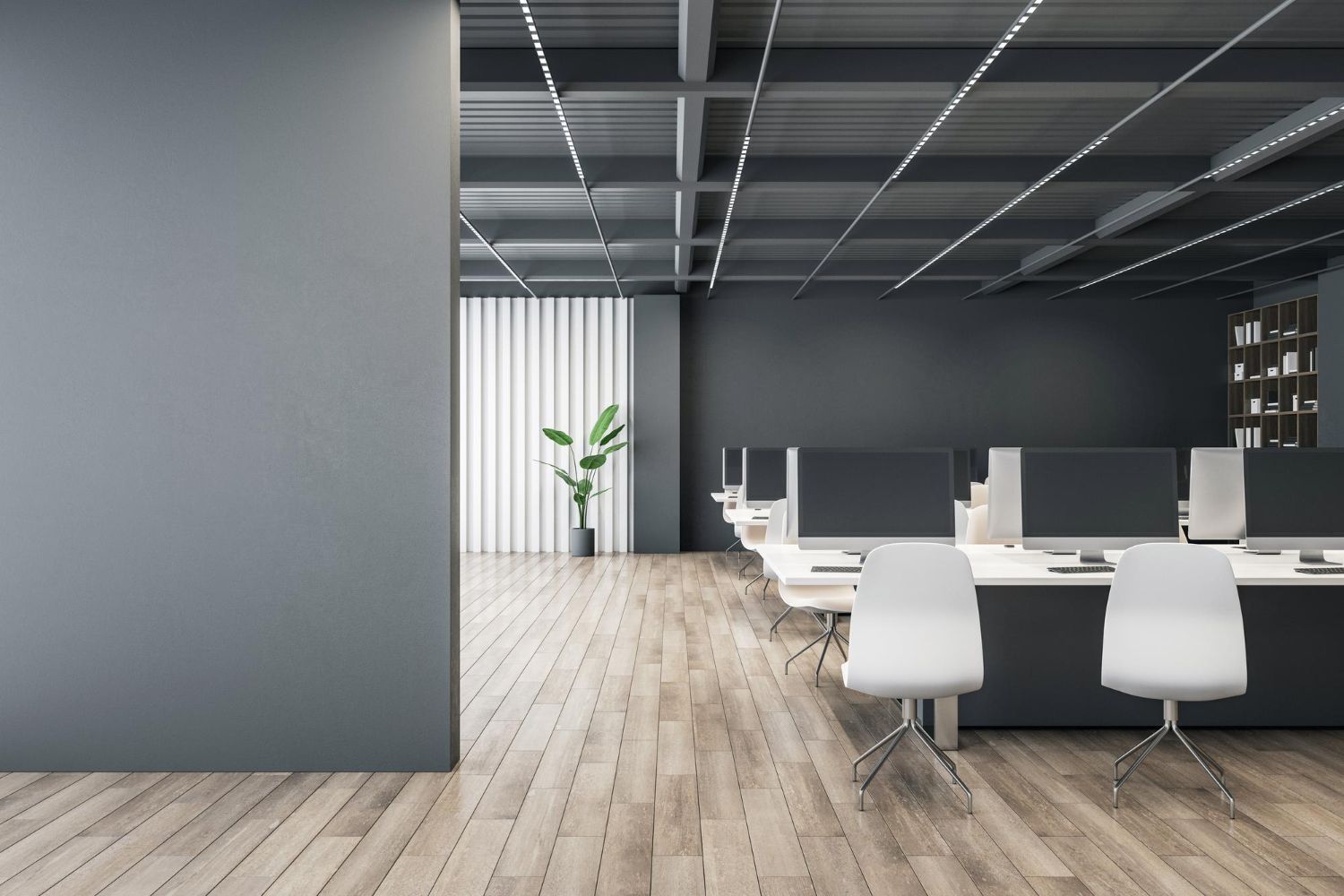
The modern office has moved beyond sterile cubicles and beige carpet. Today's workplaces prioritize employee well-being, biophilic design, and warmth that invites collaboration. Wooden flooring has become a favorite choice, offering professional polish with organic comfort. However, not all wood floors suit commercial demands. Offices face heavy foot traffic, rolling chairs, dropped equipment, and constant activity. The wrong flooring leads to rapid deterioration, excessive noise, and unexpected costs. This article reviews the most suitable wooden flooring options for offices, evaluating durability, acoustic performance, maintenance, and aesthetic appeal.
What Makes an Office Floor Different
Office spaces demand considerations that residential settings do not. A hallway may see hundreds of footsteps daily, while conference room chairs pivot and grind against the surface thousands of times per year. Add furniture reconfigurations and delivery carts, and you need serious resilience.
Acoustics also matter more. Open-plan layouts are standard, meaning conversations and keyboard clatter can become disruptive. Flooring significantly affects sound travel. Hard surfaces reflect sound; softer materials absorb it. Finding wood flooring that offers visual appeal without creating an echo chamber is essential.
Maintenance presents another difference. Homeowners schedule floor care around personal lives. Offices cannot afford extended downtime. Any flooring solution must allow cleaning and upkeep during off-hours without closing spaces for days. Aesthetic consistency across large areas matters too—offices have expansive open spaces where color variations or wear become immediately noticeable.
Engineered Wood: The Commercial Favorite
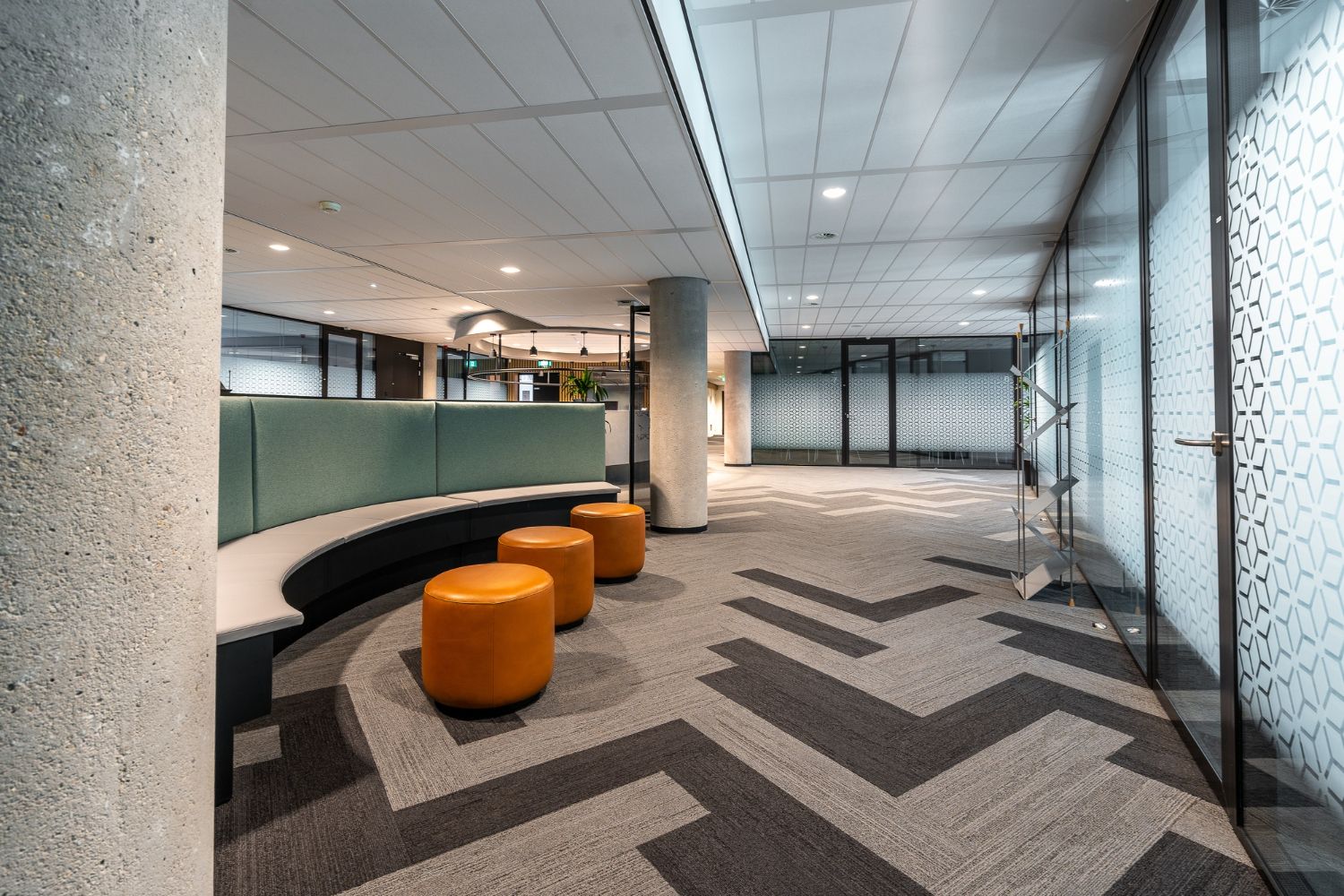 Engineered wood flooring consistently emerges as the top recommendation for office spaces. Unlike solid hardwood, which consists of a single piece of timber, engineered wood features a multi-layer construction. A top veneer of genuine hardwood sits atop a core of plywood or high-density fiberboard. This design addresses many challenges that make solid wood problematic in commercial settings.
Durability and Stability
Engineered wood's layered construction gives it superior dimensional stability. Solid wood expands and contracts significantly with humidity changes, which can cause gaps or cupping in large office spaces where HVAC systems cycle throughout the day. Engineered wood remains far more stable, allowing for wider planks and longer continuous runs without expansion gaps. The top veneer typically ranges from 2mm to 6mm in thickness, which allows for one or two sandings over the floor's lifetime—sufficient for commercial use where full refinishing may be needed every decade.
Many engineered wood products come with factory-applied aluminum oxide finishes that withstand rolling chairs and heavy traffic far better than traditional site-applied finishes. These commercial-grade finishes often carry warranties of 20 to 35 years.
Acoustic Performance
Engineered wood can be installed with integrated acoustic underlayments that dramatically reduce impact noise. When specified with cork or rubber underlays, these floors achieve sound transmission ratings suitable for open offices and multi-tenant buildings. Some manufacturers offer acoustic-backed engineered planks that combine the wood surface with pre-attached sound-dampening layers, simplifying installation while maximizing noise reduction.
Maintenance Profile
Factory finishes on engineered wood require minimal maintenance. Daily cleaning consists of dry mopping or vacuuming to remove abrasive grit. Damp mopping with manufacturer-approved products handles spills and routine cleaning. Unlike site-finished floors that require complete workspace evacuation during refinishing, engineered wood allows for targeted maintenance. Individual damaged planks can be replaced without disturbing surrounding flooring.
Aesthetic Range
Engineered wood offers extraordinary aesthetic flexibility. The hardwood veneer can be cut in various ways—plain-sawn for classic grain patterns, quarter-sawn for distinctive ray flecks, or rift-sawn for clean, linear appearance. Stain colors range from pale Scandinavian whites to deep espresso tones. Plank widths from 3 inches to 10 inches or more allow designers to scale the floor pattern to the space size.
Luxury Vinyl Plank: Maximum Practicality
 While not technically wood, luxury vinyl plank (LVP) deserves consideration for office spaces where maximum durability and moisture resistance are priorities. Modern LVP bears little resemblance to the vinyl flooring of decades past. Today's products feature high-resolution photographic layers that convincingly replicate wood grain, texture, and even subtle saw marks.
Durability Advantages
LVP stands as arguably the most durable wood-look option for commercial spaces. The best products feature wear layers of 20 mil or thicker, capable of withstanding constant rolling chair traffic without showing wear. Unlike wood, vinyl is completely waterproof, making it suitable for office kitchens, break rooms, and entry vestibules. The material also resists denting from dropped equipment.
Acoustic Performance
LVP generally performs well acoustically when installed with appropriate underlayment. Many products come with attached cork or foam backing that absorbs impact noise. The material's slight resilience—a subtle give underfoot—helps dampen footfall noise compared to rigid wood floors.
Maintenance Requirements
Maintenance stands as one of LVP's strongest attributes. The surface requires no sealing, waxing, or refinishing. Regular sweeping and damp mopping keep it looking new indefinitely. Spills pose no threat, and the material resists staining from coffee, ink, or other office hazards.
Aesthetic Considerations
While LVP has improved dramatically in visual authenticity, discerning observers can sometimes distinguish it from real wood. The repetition of grain patterns may become noticeable across very large open areas. The material also feels cooler to the touch than wood. For offices where the impression of natural materials matters to client perception, these differences may influence decisions.
Solid Hardwood: Traditional Prestige
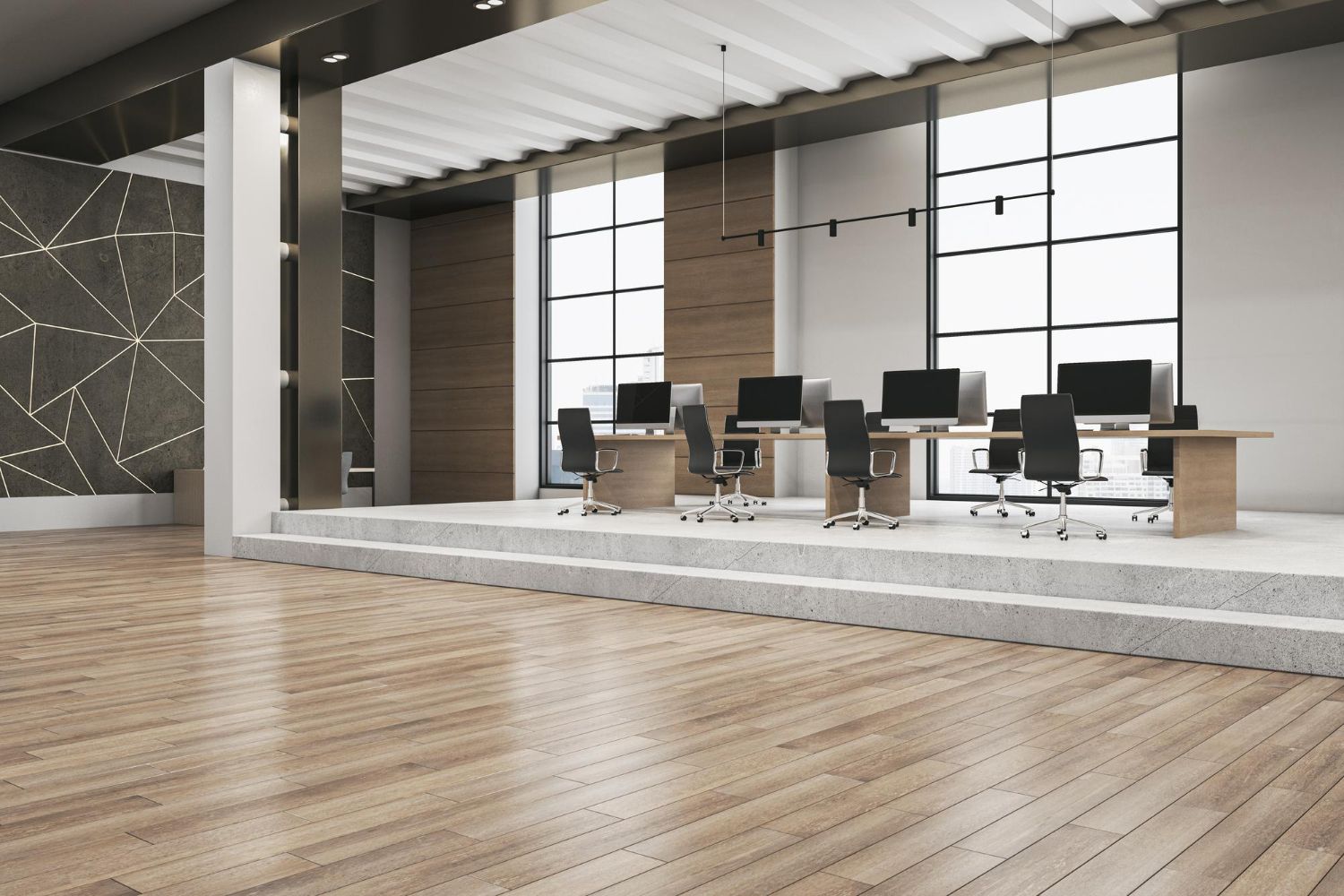 Solid hardwood flooring carries undeniable prestige. The warmth, authenticity, and timeless quality of solid wood create an impression that synthetic materials struggle to match. For executive offices, boardrooms, and client-facing spaces, solid hardwood often remains the preferred choice.
Durability Considerations
Solid hardwood offers excellent durability when properly maintained, but requires more protection than engineered alternatives. Rolling chairs must have proper casters designed for hard floors. Furniture needs felt pads. Entryways need substantial matting to trap grit. Even with precautions, solid hardwood in high-traffic office areas typically requires refinishing every 5 to 10 years.
The material's susceptibility to moisture also demands attention. Spills must be wiped immediately. Humidity fluctuations can cause gaps in winter and cupping in summer.
Acoustic Performance
Solid hardwood reflects sound more than any other wood flooring option. Without careful acoustic planning, solid wood floors in open offices create challenging sound environments. The solution involves combining the wood with substantial area rugs in seating areas, acoustic ceiling treatments, and sound-absorbing wall panels.
Maintenance Requirements
Site-finished solid hardwood requires the most maintenance. Initial installation involves sanding and finishing on-site, which cannot occur while the space is occupied. Subsequent refinishing follows the same pattern—complete workspace evacuation for several days.
Aesthetic Strengths
Solid hardwood's aesthetic advantages remain significant. No material replicates the depth, grain variation, and natural warmth of genuine solid wood. Over time, solid hardwood develops a patina that adds character. For heritage buildings and spaces where authenticity matters to brand identity, solid hardwood justifies its additional requirements.
Conclusion
The best wooden flooring for office spaces balances durability, acoustics, maintenance, and aesthetics in alignment with how the space actually functions. Engineered wood flooring emerges as the most versatile and widely suitable option, offering the authentic beauty of wood with the stability and durability that commercial environments demand. Luxury vinyl plank provides superior moisture resistance and maintenance ease, ideal for areas where practical concerns outweigh aesthetic considerations. Solid hardwood retains its place for prestigious spaces where authenticity and traditional quality matter most, provided the maintenance requirements can be accommodated.