Floor Sanding in Halifax – Wooden Flooring Experts
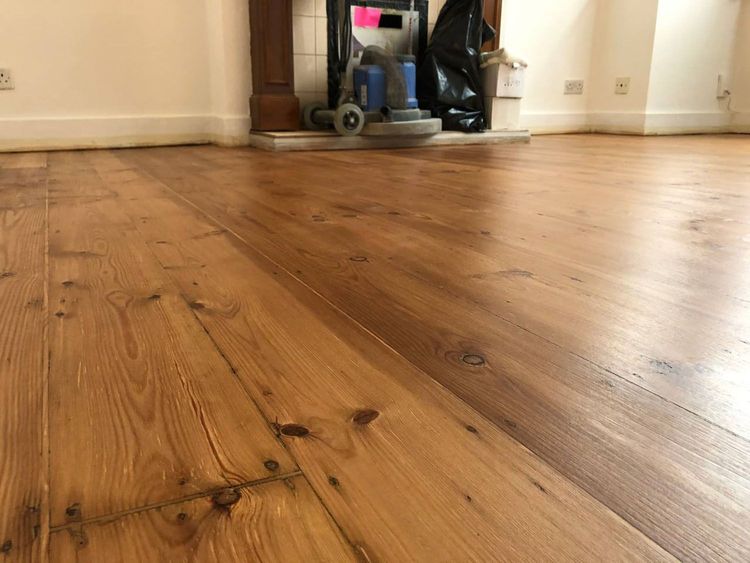
Halifax is built on hillsides, and its floors were built on stone. The town's wealth came from wool and banking, and that prosperity is still visible in the housing: Georgian townhouses clustered around the Piece Hall, substantial Victorian villas out toward Savile Park and Skircoat Green, and long rows of stone terraces climbing the slopes through Pellon, King Cross, and Ovenden. Behind a great many of those doors, original pine boards are still in place—usually under carpet, usually carrying a century or more of wear.
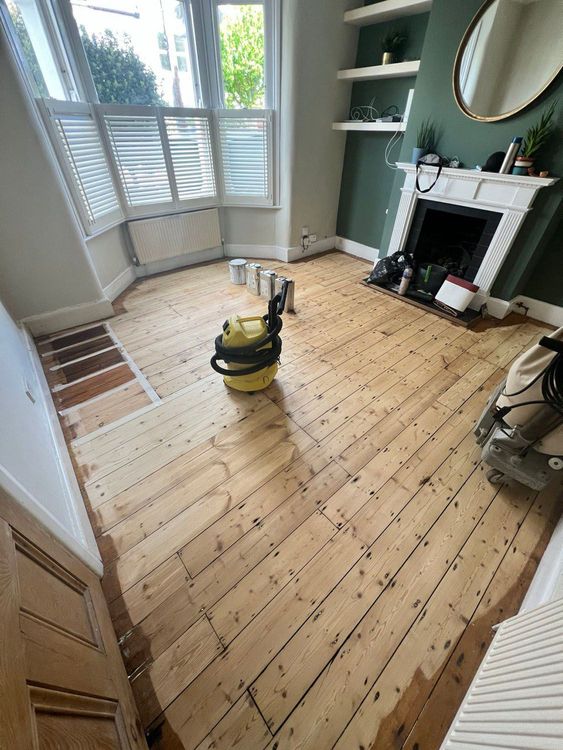
Working on floors in Halifax means dealing with softwood that has dried out slowly over generations. It is thinner than modern timber, more brittle at the edges, and unforgiving if a sander is pushed too hard. So we do not start with a machine. We start by working out how much timber is left above the tongue, whether any boards are loose or split, and whether old plumbing or wiring has left cuts that were never properly reinstated.
What we handle across Halifax:
- Wood floor sanding and refinishing for pine, oak, and hardwood
- Parquet floor sanding and loose block repair
- Floorboard repair, replacement, and gap filling
- Dust-free sanding with professional extraction
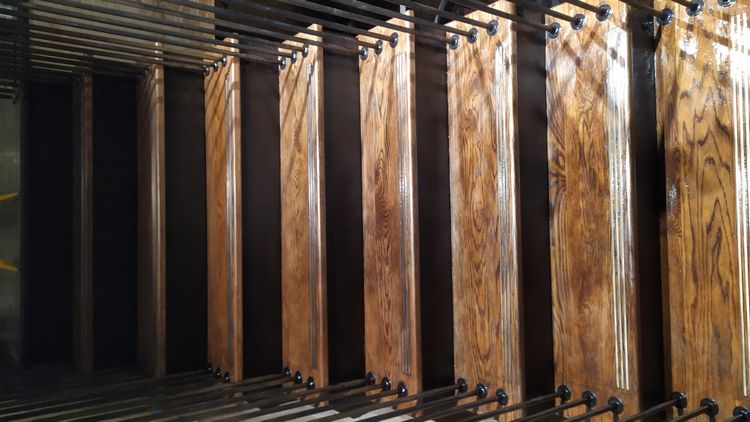
- Staining, oiling, and sealing matched to the property
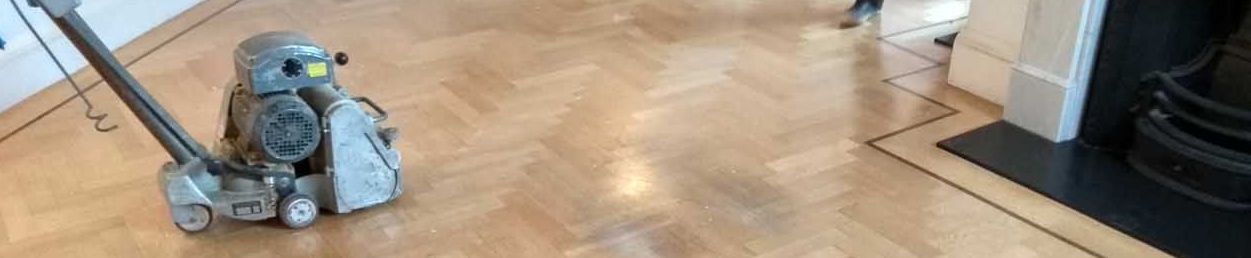
Parquet turns up more often than people expect in Halifax, particularly in the hallways and front reception rooms of the larger Victorian houses built during the town's textile boom. It cannot be treated like a standard floor. Loose blocks are re-adhered first, then the sanding runs diagonally across the pattern so the grain is not torn. It takes longer. It is also the only way to avoid ruining the floor.
Before quoting, we establish a few things:
- Remaining board thickness above the tongue
- Movement, splitting, or historic damp
- Previous repairs and mismatched inserts
- Subfloor ventilation and condition
Whether it is a weaver's terrace in Boothtown or a mill conversion near Dean Clough, the process begins with an honest look at what the floor can take.